Fitness Equipment Manufacturers & Wholesale


The Joint-Friendly Cardio: Why the Elliptical Won’t Wreck Your Knees
We’ve all been there: you’re motivated, your playlist is pumping, and you’re ready to crush a weight-loss goal. But then, a nagging thought creeps in—“Is this going to wreck my knees?”
It’s a valid concern. Many traditional fitness machines provide a great workout for the muscles but at a heavy “tax” on the joints. If you are eyeing the elliptical as your primary fat-burner, here is the lowdown on whether it’s truly safe for your knees and how to ensure you’re using it like a pro.
The Million-Dollar Question: Does the Elliptical Hurt Your Knees?
The short answer? Generally, no. In fact, compared to running on a treadmill or asphalt, the elliptical is a joint’s dream come true.
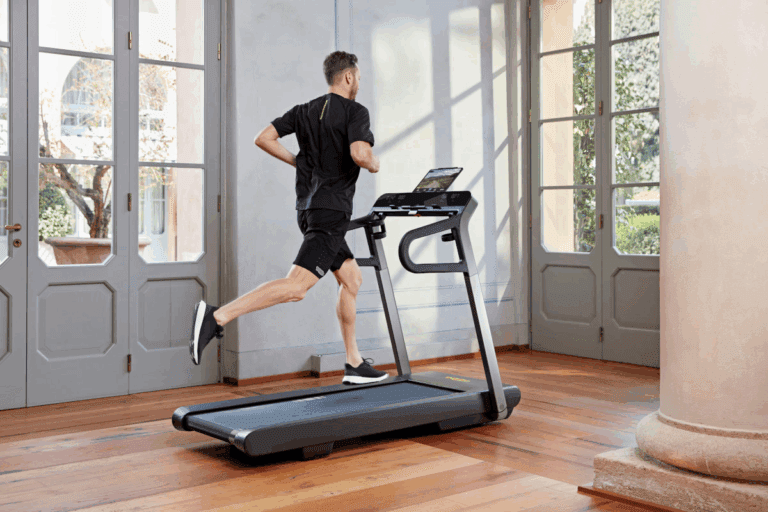
The reason is simple physics. When you run, your body weight creates a “ground reaction force” every time your foot hits the floor. That shock travels straight up through your ankles and into your knee joints. On an elliptical, your feet never leave the pedals. This creates a closed-loop motion that eliminates the jarring impact, making it one of the safest tools for cardio.
However, even the best machine can cause trouble if used incorrectly. If you feel pain, it’s usually not the machine’s fault—it’s the technique.
4 Pro-Tips to Protect Your Knees While Burning Calories
As a manufacturer of high-quality fitness equipment, we see people making the same mistakes every day. If you want to melt fat without the “joint tax,” follow these rules:
1. Keep Your Heels “Glued” to the Pedals
The most common mistake? Pedaling on your tiptoes. When you lift your heels, you shift the entire weight of your body onto the patella (the kneecap) and the surrounding tendons.
- The Fix: Keep your feet flat. By driving through your heels, you engage your glutes and hamstrings, which takes the pressure off your knees and gives you a better “booty burn.”
2. Let Your Arms Do the Heavy Lifting (Literally)
Many people treat the elliptical handles like static handrails—or worse, they don’t use them at all. This forces your legs to do 100% of the work, leading to faster fatigue and shaky form.
- The Fix: Think of it as a full-body machine. Push and pull the handles actively. This coordination balances the load across your entire body and prevents your knees from overcompensating for tired leg muscles.
3. Don’t Skip the “Pre-Game”
Jumping onto an elliptical at high resistance with cold muscles is a recipe for a strain. Your joints need synovial fluid (the body’s natural lubricant) to start flowing before you go full speed.
- The Fix: Spend 5 minutes on a low-resistance setting to “wake up” your joints. Likewise, don’t just jump off when you’re done; a 3-minute cool-down helps your muscles relax and prevents stiffness.
4. Check Your Ego at the Resistance Knob
We love enthusiasm, but cranking the resistance to level 20 on day one is a bad move. If the resistance is too high, you’ll start “grinding” through the movement, using jerky motions that put unnecessary stress on your ligaments.
- The Fix: Progress is a marathon, not a sprint. Increase the intensity only when you can maintain a smooth, fluid “oval” motion without straining.
The Manufacturer’s Perspective
At our factory, we design ellipticals with ergonomics as the top priority. We study the natural gait of the human body to ensure our machines mimic a natural stride. When you choose a well-engineered machine and pair it with the right form, the “elliptical vs. knee pain” debate becomes a thing of the past.
The Bottom Line: If you’re looking for a way to lose weight while keeping your joints “young,” the elliptical is arguably your best tool in the gym. Just remember: keep those heels down, use your arms, and listen to your body.
Looking for a machine that combines durability with ergonomic design? Explore our latest range of professional elliptical trainers and start your pain-free fitness journey today!