Fitness Equipment Manufacturers & Wholesale


Why Commercial Gyms Are Adding Pilates Reformer Beds with Wooden Box
Why a High-Quality Pilates Reformer Bed with Wooden Box Belongs in Your Facility
The growing demand for reformer Pilates in home and boutique studio settings
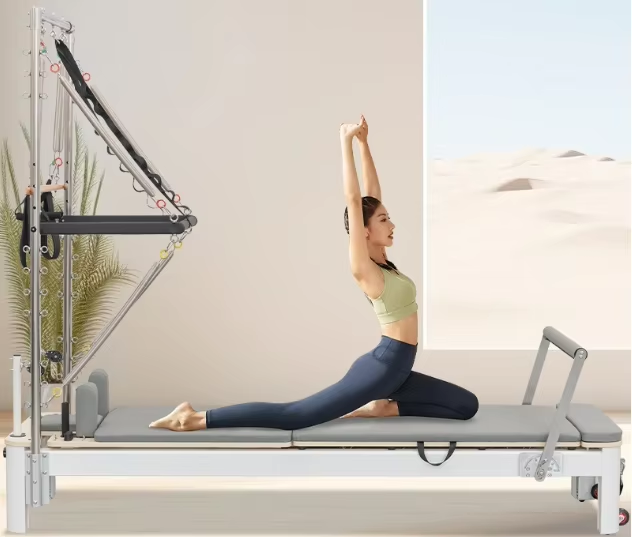
Reformer Pilates has moved from a niche studio discipline to a mainstream revenue line. Hotel fitness centers, physical therapy clinics, boutique studios, and even residential home gyms are installing reformers because the format delivers low-impact strength work with high perceived value. Operators report that a single reformer can support 8–12 paid sessions per day in a boutique setting, and hotel gyms that add two or three units typically see measurably longer average member sessions and stronger guest satisfaction scores.
The economics are straightforward: a reformer costs a fraction of a full cardio floor refresh, takes up roughly 8 square feet of floor space, and requires no power in its base configuration. For home users building a personal studio, a Pilates Reformer Bed with Wooden Box delivers the same core movement vocabulary as a $30,000+ commercial studio installation at a fraction of the cost. The result is a category that grew faster than almost any other segment of the home and light-commercial fitness market heading into 2026.
How the wooden box attachment expands programming and member retention
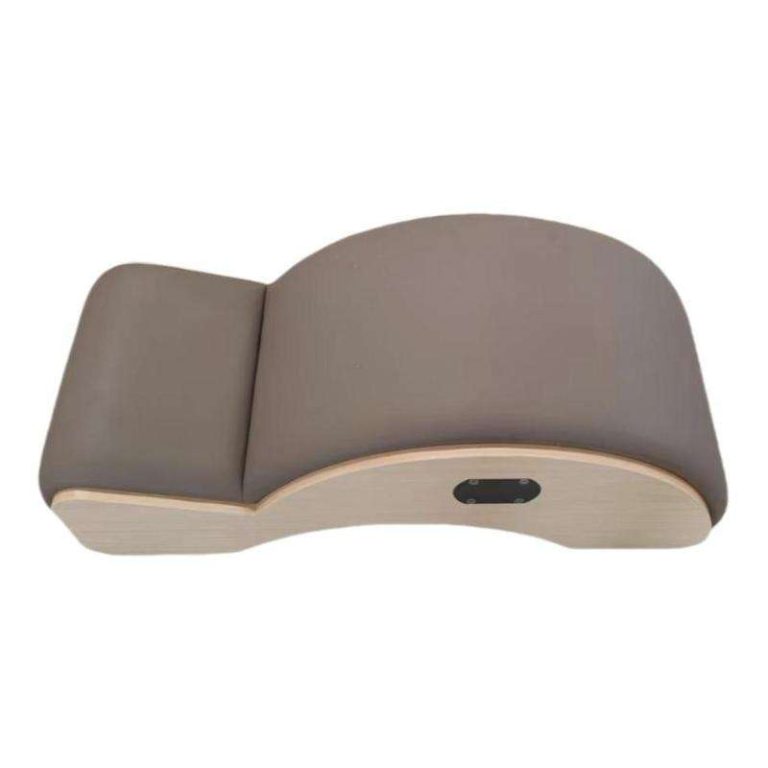
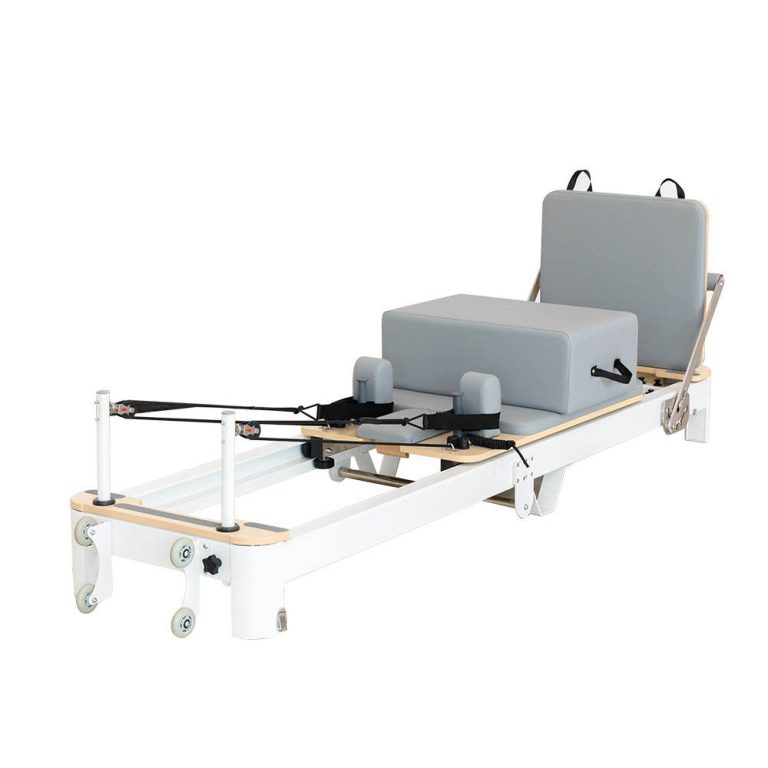
The wooden box is not an accessory — it is a second machine. Sitting or lying on the box unlocks short-box work (hamstring curls, hip lifts, seated arm series), long-box work (swan, pull straps, teaser progressions), and step-up transitions for standing balance drills. A single Pilates Reformer Bed with Wooden Box can therefore serve:
- Rehab protocols where seated stability work is required before full supine loading
- Group classes that need longer sequences without equipment swaps between stations
- Mat-to-reformer hybrid classes, where the box acts as a raised mat platform
- Small-space home studios, where one bed must cover reformer, box, and mat programming
Practically, that means more class formats per square meter and fewer “we ran out of equipment” complaints. Studios offering box-based progressions typically report higher retention among clients in weeks 6–12, the window where most drop-offs happen because the movement menu feels repetitive.
Key operational questions this guide answers for owners and managers
This guide is built for people who buy equipment with a spreadsheet, not just a wish list. It answers: What fails first on a wooden reformer under 40 hours per week of use? What clearance do you actually need? What does five years of ownership cost in springs, wheels, and upholstery? What load ratings and inspection routines keep you compliant and insurable?
We also address the intake questions that slow procurement: floor load limits, freight access through standard 32-inch doorways, and whether a wooden frame survives humid poolside hotel environments.
Why the Uport Fitness High-Quality Pilates Reformer Bed with Wooden Box is our central example
We use the Uport Fitness High-Quality Pilates Reformer Bed with Wooden Box for Home Use as the reference unit throughout this article because it hits the specification profile that commercial buyers and serious home users both need: a full-track carriage system, a solid hardwood frame, adjustable spring resistance, and an included wooden box. It is priced well below full studio towers while retaining the build characteristics that determine service life — which makes it an honest benchmark against which to compare cheaper imports and premium Cadillac-class systems.
Real Problems Facilities Face with Pilates Reformer Equipment
Downtime from frequent carriage and spring failures
On budget reformers, the two most common failure points are the carriage wheels and the spring clips. Nylon wheels on thin aluminum tracks develop flat spots and rattle within 6–12 months of daily group use, and generic spring hooks stretch until tension readings drift 20–30% from specification. Once springs drift, instructors can no longer cue resistance by number, and the machine becomes unreliable for progressive programming.
In a 12-unit boutique studio running 30 classes per week, a single out-of-service reformer for 10 days can displace 60–90 client sessions. At $30–$45 per session, that is $1,800–$4,000 in rescheduled or lost revenue from one machine — more than the price difference between an economy reformer and a properly built one.
Member complaints about uncomfortable or unstable footbars
Footbar instability is the number-one complaint we see reported by studio managers. Symptoms include lateral wobble during heavy footwork, locking pins that require two hands to seat, and padding that compresses to the metal bar within months. The knock-on effects are real: clients reduce resistance to feel safe, instructors lose the ability to progress load, and the machine feels “cheap” regardless of how good the frame is.
A commercial-grade footbar should lock with one hand, show zero detectable play under a 200 lb / 91 kg push, and be adjustable across at least four positions covering roughly 90–160 degrees of arc.
Durability failures in wooden frames and upholstery under high use
Wooden reformers are chosen for aesthetics and vibration damping, but not all wood is equal. Softwood and laminated pine frames show joint separation, screw pull-out, and finish cracking in humid rooms within 18–24 months. Upholstery fails even faster: low-density foam (under 25 kg/m³) collapses into the carriage deck under repeated long-box and jump-board loading, and standard vinyl splits at high-flex corners around the shoulder rests and box edges.
Studios typically reupholster at the three-year mark. On well-built maple units, that interval stretches to five to seven years.
Hidden costs of cheap imports: replacement parts and service delays
A $700 import reformer looks like a bargain until you try to source a replacement spring set. Non-standard hook geometry, metric-only wheel axles, and discontinued models create 4–12 week parts delays, and many low-cost suppliers do not stock spares at all. Buyers frequently end up scrapping an entire unit over a $40 component.
The rule we recommend to procurement teams: before ordering, confirm that springs, wheels, footbar pins, and upholstery covers are all available as line-item spares with published lead times. If the supplier cannot answer that in writing, the machine is a liability rather than an asset.
Technical Deep Dive: What Makes a Pilates Reformer Bed with Wooden Box Commercial-Grade
Frame construction: solid maple vs. cheaper softwoods
Solid maple or oak hardwood is the standard for commercial wooden reformers. Maple offers high density (roughly 700–750 kg/m³), excellent screw-holding strength, and resistance to seasonal movement. Frames should use mortise-and-tenon or doweled and bolted joinery — not screws into end grain — with corner blocks or steel brackets at the highest-stress joints.
For facilities that need a folding footprint, Uport’s MALPLE Adult Folding Gym Core Bed Steel and Maple Wood Pilates Reformer demonstrates how steel reinforcement can be combined with maple to keep rigidity while allowing storage. For permanent installations, a fixed full-track frame like the Uport High-Quality Pilates Reformer Bed with Wooden Box is the more rigid option and should be your default in studios where the bed never moves.
Upholstery and foam density for daily high-traffic use
Specify foam density of 40–60 kg/m³ for the carriage pad and box top, with a minimum 50 mm (2 in) thickness on the carriage and 40 mm on the box. Marine-grade or contract-grade vinyl should be at least 1.1–1.3 mm thick with a stain-resistant, sweat-resistant topcoat. Stitching should be double-row at load points, and all seams positioned away from contact zones.
Why it matters commercially: higher-density foam holds its shape under a 200 lb client doing 30 minutes of seated box work without bottoming out. Lower-density foam will look acceptable on day one and be unusable by month eight.
Carriage, wheels, and track system: smoothness and wear resistance
A full-track reformer uses rails that support the carriage along its entire travel rather than only at the head end. Look for:
- Rail length supporting 39–41 in (990–1040 mm) of carriage travel — enough for tall clients and full-range long-box work
- Eight-wheel carriage setups (four top, four side) with sealed or shielded bearings
- Polyurethane or high-durometer nylon wheels rather than soft rubber, which flattens
- Anodized aluminum or hardwood-capped rails that resist scoring
Smoothness should be judged unloaded and loaded. With a 150 lb test load, a good carriage moves with 2–4 lb of breakaway force and returns to the stopper without a metallic clack. Anything that rattles at speed will rattle louder in six months.
Springs and footbar mechanisms: tension range and replaceability
Typical commercial configurations use three to five springs in graded tensions — commonly described in color-coded sets ranging from light (roughly 25–30 lb) to heavy (roughly 100–150 lb) — giving a total working range near 25–200 lb when combined. Springs should be music-wire or oil-tempered steel with swaged ends and stainless or zinc-plated clips with a locking snap, not open hooks.
Footbar mechanism should be a spring-loaded or cam-lock design with at least four positions and a positive lock indicator. Insist on replaceable clips and individually available spring sets, since mixed-age springs cause uneven resistance and are the most common reason a machine feels “different” to every client.
Installation and Space Checklist for Your Pilates Reformer with Wooden Box
Floor load and surface requirements for wooden reformer beds
A wooden reformer bed with box typically weighs 130–190 lb (60–85 kg) empty; with a 250 lb user that is a total live load near 400–440 lb spread over roughly 10 square feet (about 40–44 lb/ft²). That is comfortably within the capacity of a standard commercial raised floor, but residential upper floors with narrow joist spans should be checked by a structural professional if you plan three or more beds in one room.
Surfaces should be level within 3 mm across the footprint to prevent frame racking. On tile, polished concrete, or vinyl plank, add a rubber underlay to prevent sliding and protect finishes — a 6–10 mm EPDM roll works well and also damps vibration in group class spaces. Uport’s Durable EPDM Rubber Home Gym Flooring Rolls are a practical match for reformer zones where you also want to protect the floor from box placement and foot traffic.
Clearance dimensions for safe entry, exit, and full carriage travel
Plan a footprint of 8 ft × 2.5 ft (2440 × 760 mm) per reformer, then add clearance:
- 18–24 in (450–600 mm) on the footbar end for mounting and instructor access
- 12–18 in (300–450 mm) on the head end for headrest adjustment and tower clearance
- 24 in (600 mm) minimum between adjacent reformers for safe side dismount
- 36 in (900 mm) minimum aisle width for wheelchair access in PT and clinical settings
For class-based layouts, 30–33 ft² per station is a realistic planning number once you include dismount space and instructor circulation.
Power and accessory needs (if adding towers or Cadillac attachments)
A base wooden reformer needs no power. If you plan to add a tower or Cadillac-style attachment for clinical programming, budget for one 110–120 V outlet per two stations at floor level, plus cable management so push-through bars and straps do not create trip hazards. Facilities that want integrated tower work without two separate machines should compare Uport’s Elevated Bed Pilates Reformer with Integrated Cadillac Tower, which consolidates functions but demands more headroom — plan 7.5–8 ft ceilings minimum.
Delivery access: doorways, elevators, and unpacking space
A shipped reformer arrives in a crate roughly 100–104 in long, 28–30 in wide, and 16–20 in high, weighing 220–300 lb. That crate will not fit through a standard 32 in door at an angle — verify a minimum 36 in clear opening, or plan for a freight dock and on-site uncrating.
For hotels and upper-floor studios, confirm elevator car depth of at least 60 in and door width of 42 in, or budget a stair carry with two to three people. Reserve a 10 ft × 8 ft staging area for uncrating, foam removal, and assembly. Assembly is typically 30–60 minutes per unit with two people and standard hand tools.
Maintenance Schedule and 5-Year Cost Estimate for Wooden Pilates Reformer Beds
Daily and weekly tasks: wiping upholstery, checking springs, cleaning tracks
Daily: wipe upholstery and box surfaces with a mild disinfectant safe for vinyl (avoid alcohol-heavy sprays, which dry and crack the topcoat), and visually inspect spring clips and the footbar lock. Weekly: vacuum or brush rail channels, check that all springs seat with an audible click, and confirm the carriage returns fully to the stopper without dragging.
Budgets: 5–8 minutes per unit per day, or roughly 25–35 labor hours per year for a 10-unit studio.
Monthly and quarterly inspections: frame bolts, wheel alignment, footbar locks
Monthly, torque frame and leg bolts to the manufacturer’s specification — commonly 20–25 Nm for M8 hardware — and check for any new play in the carriage. Quarterly, inspect all eight wheels for flat spots, confirm rail alignment with a straight edge, test the footbar through its full adjustment range, and check headrest and shoulder-rest fasteners.
Log every inspection. Insurers and clinical auditors increasingly ask for equipment maintenance records, and a documented schedule shortens the “was this maintained?” conversation after any incident.
Annual replacement parts budget: springs, wheels, and upholstery
For a machine used 25–40 hours per week, plan on:
- Spring sets: replace every 12–18 months, $50–$100 per set of five
- Carriage wheels: inspect annually, replace as a full set every 24–36 months, $40–$90 per set
- Footbar pads and shoulder rests: every 12–24 months, $25–$60
- Upholstery re-cover: every 5–7 years, $180–$350 per machine including labor
- Miscellaneous hardware, clips, and stopper pads: $20–$50 per unit per year
Annualised, that is roughly $80–$160 per machine per year in parts on a well-built wooden reformer. On low-cost imports, it is often double — with far longer downtime.
Five-year total cost of ownership vs. lower-priced alternatives
Consider a 10-unit studio. A commercial-grade wooden Pilates Reformer Bed with Wooden Box at roughly $1,400–$2,200 per unit (bulk orders typically land nearer the low end) costs $14,000–$22,000 upfront. Over five years, add about 8–12% in parts and maintenance — roughly $1,200–$2,600 for the fleet — for a five-year total of $15,200–$24,600, or about $304–$492 per unit per year.
A $700 economy unit looks like a 60% saving on paper. In practice, expect: full spring replacement yearly plus at least one carriage rebuild, 15–25% of units retired before year five, and 5–15 days of cumulative downtime per machine. Realistic five-year cost lands at $1,300–$1,600 per unit — often higher than the premium machine — plus the reputational cost of clients noticing which reformers are broken. That comparison is exactly why studios investing in 2026 are trending toward properly specified wooden and aluminum reformers rather than subscription-style or bargain hardware, a shift explored further in why a Pilates reformer is the hottest home-buy of 2026.
Safety, Compliance, and Red Flags for Pilates Reformer Beds with Wooden Box
Pre-use inspection checklist and staff training requirements
Every shift should include a documented 60-second check per machine:
- All springs seated fully, no visible gaps between coils or stretched hooks
- Carriage travels freely and stops positively at both ends
- Footbar locks in every position with no lateral play
- Box sits flat, no rocking, no cracked edges or exposed fasteners
- Straps, ropes, and handles free of fraying; pulleys turn without grinding
- No loose bolts, no wobble when the frame is pushed sideways
Staff should be trained to tag out any machine that fails a check. In clinical environments, the treating therapist should also confirm that spring resistance matches the prescribed progression.
Relevant safety standards and load ratings for commercial use
Specify equipment that carries a stated user weight capacity — 300–400 lb (136–181 kg) is standard for commercial-grade reformers — and a frame that has been cycle-tested for carriage travel and spring loading. Look for declaration of conformity to recognised stationary training equipment standards (EN ISO 20957 series, including the relevant parts for strength-training and general fitness equipment) and ask for load-test documentation rather than marketing claims.
Two numbers matter most in procurement: maximum user weight, and spring-cycle durability. Ask for both in writing, plus the warranty terms attached to each.
Common pitfalls: ignoring spring fatigue, overloading the box, improper storage
Spring fatigue is gradual and invisible. A set that has lost 15% of its tension still looks perfect but alters every exercise’s resistance — and can cause a client working at a fixed cue to overload. Replace the whole set, never individual springs.
The wooden box is commonly misused as a step or jump platform rated for a 250 lb user; a 300 lb client jumping onto a box not designed for it is a warranty and safety issue. Keep the box stored flat, not on its end, and never leave it balanced on the carriage where it can slide.
Humidity is the third pitfall: unheated poolside or coastal hotel gyms should target 40–60% relative humidity and avoid direct air-conditioning blow on wooden frames, which causes seasonal cracking.
When to retire a wooden reformer bed from service
Retire a machine when any of the following occurs:
- Visible cracks in load-bearing frame members, or a joint that reopens after re-tightening
- Rail scoring deep enough that the carriage wheel contact surface is compromised
- Repeated wheel replacement within a 12-month window (indicates rail or frame distortion)
- Corrosion or elongation in spring anchor points
- Two or more failed post-repair inspections in a year
Most well-maintained hardwood reformers reach 8–12 years of commercial service. Many are still safely used as home units for years afterward, which is why a clear decommissioning policy also gives you resale or secondary-space value.
FAQs About the High-Quality Pilates Reformer Bed with Wooden Box
Is this reformer bed suitable for commercial studios or only home use?
It is built to a specification that covers both. The full-track carriage, hardwood frame, and included wooden box meet the durability demands of boutique studios, PT clinics, and hotel fitness centers running multiple sessions per day — while the footprint, price point, and no-power operation suit home studios. For light-commercial use we recommend the maintenance schedule above; for high-volume group studios, budget spring replacement annually.
What is the weight capacity and dimensions of the wooden box?
Commercial-grade units in this class typically support a 300–400 lb (136–181 kg) user with a reformer footprint of roughly 96 in × 26 in (2440 × 660 mm) and a bed height of 12–14 in (300–355 mm) to the top of the carriage. The included wooden box is generally around 29 in × 23 in × 12 in (740 × 580 × 300 mm) with side handles, weighing 25–35 lb. Always confirm current published specifications on the product page before specifying for an installation.
How often should springs be replaced on a daily-use reformer?
For a machine in daily use (4+ hours per day, six days a week), replace the full spring set every 12 months. For 2–3 sessions per week, 18–24 months is realistic. Test annually: a spring that hangs longer than its set-mates when unloaded, or that reads more than 10% below rated tension, has fatigued and should trigger a full-set replacement.
Can the wooden box be removed or used separately?
Yes. The box lifts off the carriage and can be used on the floor for mat-based short-box work, as a seated platform for clinical assessments, or as a raised prop for standing balance drills. This dual use is one of the strongest arguments for a Pilates Reformer Bed with Wooden Box in space-constrained home studios and hotel fitness rooms — one purchase supports three programming formats.
Final Verdict: Is the High-Quality Pilates Reformer Bed with Wooden Box Right for Your Space?
Key takeaways for facility owners and home studio operators
Buy the frame, not the finish. Solid maple or oak construction, a full-track carriage with eight properly bearinged wheels, replaceable graded springs, and a positive-lock footbar are the four specifications that determine whether a reformer is still serviceable in year eight.
The wooden box is the highest-value attachment you can get: it doubles your exercise library, supports rehab and beginner-friendly seated work, and lets a single unit serve multiple class formats. A machine at $1,400–$2,200 with $80–$160 per year in parts is cheaper over five years than a $700 import that eats springs and downtime.
And for facilities that need variety in the same footprint, it is worth comparing adjacent formats — a folding maple option such as Uport’s Maple Wood Gym Bed Portable Pilates Reformer for small spaces, or a Cadillac-class unit like the Commercial Home Use Pilates Cadillac Equipment Maple Wood Core Bed — against the wooden-box reformer in your final shortlist.
Next step: request a quote or view the product page on Uport Fitness
If you are specifying for a hotel gym, PT studio, boutique reformer box, or a home studio that has to work like a commercial one, start with the High-Quality Pilates Reformer Bed with Wooden Box for Home Use on uportfitness.com. Confirm current specifications, warranty terms, and spare-part availability, then request a bulk quote with your required unit count and delivery access details — including doorway width, elevator dimensions, and target install date — so freight and staging can be planned before the crate arrives.