Fitness Equipment Manufacturers & Wholesale


Maple Wood Pilates Reformer: The Space-Saving Gym Bed for Studios
Why a Portable Pilates Reformer Is the Smart Buy for Space-Constrained Facilities
The floor-space problem: how folding reformers change room economics
A conventional fixed Pilates reformer occupies roughly 2.3 m × 0.7 m of floor and needs another 0.6 m of clearance on the long sides for a client to mount, change springs, and swing the footbar. In practice that is 4.5–5.5 m² of permanently dedicated footprint per station. In a 60 m² boutique studio, that arithmetic decides whether you open with six stations or nine — and nine stations at €22–€28 per class is a completely different revenue model than six.
A portable Pilates reformer reframes the same equation. A well-engineered folding bed collapses to approximately 1.05 m × 0.62 m × 0.38 m — a footprint of about 0.65 m² — and can be stood on end against a wall or wheeled into a 1.5 m² storage closet. For hotel gyms carved out of a 25–35 m² guest-floor room, PT clinics that must clear floor space for gait training, and multi-use commercial boxes that run Pilates before 10 a.m. and circuits after 6 p.m., that convertibility is worth more than any single hardware upgrade.
What this comparison covers: from criteria to cost to after-sales
This guide is written for buyers evaluating equipment at volume, not for consumers browsing a marketplace listing. It compares portable reformer options on five measurable criteria: true folded footprint versus claimed footprint, frame material and joint construction, spring and adjustment range for mixed-ability users, portability mechanics and floor protection, and the boring-but-decisive factors — warranty terms, spare parts availability, packaging quality, and freight damage rates.
Each section includes indicative 2026 pricing bands, realistic facility scenarios (hotel gyms, PT and rehab studios, commercial boxes, premium home studios), and the specific specifications to request in a quotation. Where a single product is the most sensible default for space-constrained buyers, we name it — and the reference model throughout is Uport’s maple folding reformer.
Meet the benchmark: Uport’s Maple Wood Gym Bed Portable Pilates Reformer
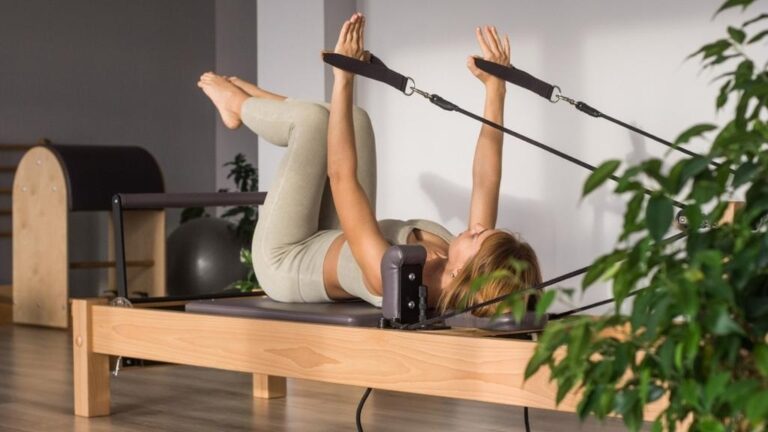
The Maple Wood Gym Bed Portable Pilates Reformer: Perfect for Small Spaces The Ultimate Home Fitness Studio is the product this guide uses as its yardstick. It is a solid maple-wood folding bed with a steel spring bar and hinge assembly, a three-position footbar, three-position headrest, five colour-coded springs, and 40 mm high-density PU upholstery. Setup length is around 2.1 m, folded length around 1.05 m, unit weight approximately 42 kg, and rated user capacity 150 kg.
What makes it a useful benchmark is that it sits in the middle of the market on price while scoring at the top on the two things small facilities actually care about: it folds to under half its working length, and it uses the same maple-wood rail construction found on fixed studio reformers rather than a lighter aluminium-alloy compromise. Buyers can therefore compare every other option against a known reference instead of against manufacturer copy.
Market Context: The Rising Demand for Foldable Maple Wood Pilates Reformers
Small-space fitness and boutique Pilates trends driving reformer demand
Reformer Pilates has moved from a niche studio format to a mainstream revenue line, and the growth is disproportionately happening in small footprints. City-centre micro-studios of 40–80 m², hotel fitness rooms, apartment-building amenity gyms, and physiotherapy practices are all adding two to six reformers rather than building out large dedicated halls. Each of those operators shares the same constraint: the room must do something else for part of the day.
That is the structural reason foldable reformers have outpaced fixed-bed growth in the entry and mid-market segments. A studio that can stow six reformers in a 3 m² closet and reset the floor for mat classes, workshops, or private assessments earns roughly 40–60% more usable hours from the same lease. Buyers are no longer asking “does it fold?” as a novelty question — they are asking how many fold cycles the hinge is rated for and whether the folded unit fits a standard 900 mm door frame.
Supply-side considerations: wood sourcing, folding mechanisms, and lead times
Maple is the preferred hardwood for reformer beds because it is dense, dimensionally stable, and takes a hard lacquer finish without the checking and warping that softer woods show in dry, air-conditioned interiors. The trade-off is supply volatility: premium hard maple has seen 8–14% annual price movement in recent cycles, and mills quote in 4–8 week windows. Buyers placing multi-unit orders should confirm whether the price holds for the full production run and whether the factory stocks kiln-dried stock or buys to order.
Folding mechanisms are the other supply-side variable. A quality hinge assembly uses steel pivots with locking pins and a secondary safety latch; the cheaper alternative is a friction hinge that loosens after a few hundred cycles. Ask for a cycle rating in writing — 5,000 open/close cycles is a reasonable commercial-grade claim, and a supplier who cannot quote a number is usually guessing. Standard lead times for maple folding reformers from established Chinese manufacturers run 25–40 days for 20–100 units, plus 25–35 days ocean freight to Europe or North America.
Why B2B buyers are shifting from fixed to portable reformers in 2026
Three pressures are accelerating the shift. First, rents: a folding fleet lets operators sign smaller leases without cutting class capacity. Second, capital flexibility: folding units are typically 20–35% cheaper per station than full-track studio reformers, which shortens payback from 14–18 months to 9–12 months at typical class pricing. Third, mobility: pop-up classes, corporate wellness contracts, and event activations all require equipment that can leave the building.
The caveat is that not every facility should go fully portable. Studios running 30+ reformer classes per week with fixed class grids generally keep a core of fixed beds and use folding units for overflow and secondary rooms. The mixed fleet is now the most common configuration we see in quotations for 2026 build-outs.
Internal reference: wholesale foldable oak and maple reformer outlook
For buyers planning a full-year equipment budget, the 2026 wholesale outlook on foldable oak and maple reformers covers container economics, MOQ tiers, and margin maths in more detail than this guide can. The short version: at 20+ units, per-unit landed cost typically falls 18–26% versus single-unit sampling, and mixed container loads of folding beds plus chairs or Cadillac towers usually beat split shipments on freight.
What to Look for in a Portable Pilates Reformer for Small Spaces
Footprint and foldability: real storage dimensions vs claimed dimensions
Always request the folded dimensions in millimetres, not the marketing phrase “folds compactly.” Three numbers matter: folded length, folded height, and folded width at the widest point (usually the footbar or the wheel brackets). A unit that folds to 1.05 m × 0.62 m × 0.38 m fits a standard 900 mm door and can be stacked two-deep in a shallow closet; a unit that folds to 1.4 m × 0.75 m × 0.5 m needs a dedicated alcove and loses most of the space advantage.
Also verify the fold geometry, not just the number. Beds that fold at the centre with a piano-style hinge are quicker to deploy (10–15 seconds) and easier for hotel guests to use unsupervised. Beds that fold in a Z-configuration are more compact but heavier to lift. Test the deployed length too — anything shorter than 2.0 m of rail travel will feel cramped for users over 185 cm.
Frame material and build quality: maple wood vs steel vs aluminium
Maple wood frames deliver the warm, damped feel that studios and clients associate with premium Pilates, and they absorb vibration better than metal on sprung floors. Expect a solid maple rail of 60–80 mm section, kiln-dried to 8–10% moisture content, finished with a hard lacquer. Steel frames are the most durable per euro and best for high-traffic commercial boxes, but they are heavier (55–75 kg) and colder in feel. Aluminium-alloy frames are the lightest option — often 32–38 kg — and suit mobile operators and upper-floor installations where floor loading is a concern.
A practical rule for buyers: maple for client-facing boutique and hospitality environments, steel-and-hardwood hybrids for rehab and high-volume commercial, and aluminium where the unit must be moved weekly. For comparison, the aluminium foldable Pilates reformer weighs roughly 10–14 kg less than the equivalent maple bed, which matters if one staff member handles setup alone.
Adjustability and resistance feel for varied user levels
A reformer serving mixed ability needs at least four springs — commonly two light, one medium, two heavy — and a spring bar with three hook positions so tension can be tuned without swapping springs mid-session. Check the footbar: three positions covers the range from beginner footwork to advanced long-box work; five positions is better for rehab use where ankle range is limited.
Resistance quality matters more than spring count. Ask whether springs are nickel-plated music wire with swaged ends (the durable standard) and whether the supplier stocks replacements in matched tension sets. Mismatched springs are the single most common cause of uneven resistance complaints in multi-unit studios. The rise of reformer training as a mainstream strength format — covered in why reformer Pilates builds a toned physique — has pushed spring tension accuracy from a nice-to-have to a specification item.
Portability mechanics and floor protection
Look for integrated transport wheels that engage when the bed is tipped past roughly 30°, rather than clip-on dollies that get lost. Weight distribution matters: a 42 kg maple bed with wheels at the hinge end rolls easily on a single hand, while a 65 kg steel unit really needs two people regardless of what the brochure says. Confirm the wheels are non-marking polyurethane for timber and vinyl studio floors.
Floor protection also covers the contact points. Rubber or EVA feet under each leg prevent scratching and reduce noise transmission — important in hotel gyms with guest rooms below. If your room is multi-use, budget €18–€35 per m² for interlocking rubber flooring; a roll-based anti-slip product keeps the reformer from creeping during vigorous work.
Warranty, replacement parts, and maintenance access
Commercial-grade warranty structures typically break down as follows: 3 years on the wooden frame and hinge assembly, 1–2 years on the steel spring bar and hardware, and 6–12 months on upholstery and springs. Anything materially shorter than that on the frame is a signal about the wood sourcing. Springs are consumables and should be priced separately — expect €6–€14 per spring depending on tension.
Ask three specific questions before ordering: How many fold cycles is the hinge rated for? Are spare hinge pins, spring bars, and footbar brackets held in stock? What is the quoted response time for a warranty claim — 48 hours for a diagnosis and 7–10 days for parts is a workable commercial standard. Get the answers in the proforma invoice, not in a chat message.
Top Space-Saving Pilates Reformer Options by Facility Type
For hotel gyms and hospitality fitness rooms: the Uport Maple Wood Gym Bed
Hospitality is where the Maple Wood Gym Bed portable reformer performs best. Hotel fitness rooms are typically 25–45 m², must accommodate several activity types, and are used by guests with minimal instruction. The maple finish reads as premium against typical hotel interiors, the 150 kg user rating covers the full guest range, and the 42 kg weight means a single housekeeping or fitness attendant can reset the room in under a minute.
Two units store in roughly 1.3 m² against a wall — the equivalent of one treadmill footprint — and the 10–15 second deployment means guests can use them without staff assistance. For properties layering Pilates into a wellness package, this is the lowest-friction way to add a reformer offering without surrendering floor area to a fixed bed. Pair with wall-mounted trainers or a compact abdominal station if the room also needs strength options.
For PT studios and rehab clinics: adjustable steel-and-maple folding core bed
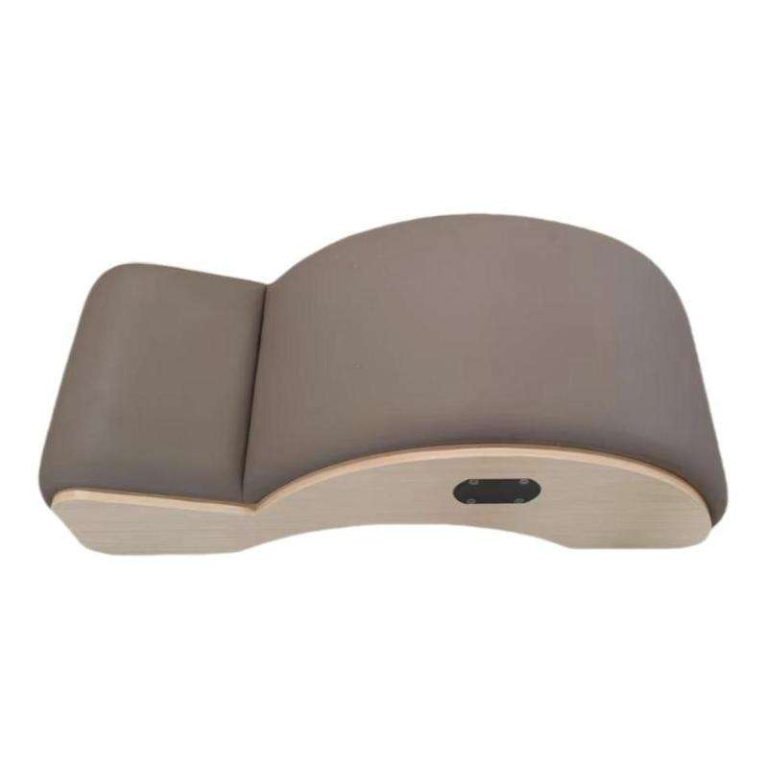
Physiotherapy practices need adjustability first, aesthetics second. The MALPLE adult folding gym core bed with steel and maple wood frame suits clinics that run a mixed caseload: the steel-reinforced frame handles repeated transfers and higher-load eccentric work, while the maple rails keep the unit appropriate for clinical environments. Multiple footbar and headrest positions let one practitioner move from post-surgical ankle work to full-body strengthening without changing equipment.
In a 30 m² treatment room, three folding beds can be stowed in a 1.6 m² footprint between appointments, freeing the floor for mat-based assessment and gait work — a layout that is impossible with three fixed reformers. For clinics that also offer Pilates-based group sessions, keep one fixed unit for the practitioner and two folding units for clients.
For commercial boxes and multi-use studios: oak wood folding reformer and Cadillac combos
High-volume commercial boxes need durability and throughput. Oak is the pragmatic choice: it is 10–15% less expensive than premium maple, slightly heavier and harder, and entirely adequate for a room running 40+ sessions a week. The oak wood folding Pilates reformer for gym and studio use is available as a standalone bed or in Cadillac and chair configurations, which lets an operator standardise on one supplier and one spare-parts list across the whole floor.
For studios running Cadillac tower work alongside reformer classes, the maple wood Cadillac reformer with box packing delivers full-tower functionality with the same fold-and-stow logic. A typical mixed commercial installation: six folding reformers, two Cadillac towers, two chairs in a 110 m² room, resetting to an open circuit-training floor for evening blocks.
For premium home studios: aluminium foldable and full-track wood options
At the top of the home segment, buyers want studio-grade feel without dedicating a room. The full-track wooden reformer bed with wooden box gives the longest rail travel and the most complete exercise library, at the cost of a fixed 2.3 m footprint — sensible only in a dedicated 15 m²+ room. Where space is genuinely tight, an aluminium foldable unit at 32–38 kg is easier to move weekly and kinder to timber floors in upper-floor apartments.
For households with two users of different heights and strengths, prioritise adjustability over frame material: five-spring setups with three spring-bar positions and a five-position footbar serve a 160 cm beginner and a 190 cm athlete from the same bed.
Budget and Total Cost of Ownership for Portable Pilates Reformers
Upfront cost ranges: maple wood vs oak vs aluminium folding reformers
Indicative 2026 pricing for folding reformers, quoted per unit at 10–30 unit volumes and excluding freight and duty:
- Oak wood folding reformer: USD 620–1,050 per unit; entry-tier spring and upholstery packages sit at the bottom of the range.
- Maple wood folding reformer (Uport Maple Wood Gym Bed class): USD 850–1,450; solid maple rails, steel hinge, five springs, 150 kg rating.
- Aluminium-alloy folding reformer: USD 900–1,600; premium for weight reduction and corrosion resistance.
- Cadillac / tower configurations: USD 1,400–2,600 depending on tower height, frame material, and included accessories.
Single-unit sampling typically lands 30–45% higher than volume pricing once freight, crating, and duties are included. Budget a further 3–6% for inland delivery and unpacking at the destination.
Five-year operating costs: maintenance, replacement parts, and downtime
A commercial folding reformer running 25 sessions a week needs a spring set replacement roughly every 18–24 months (USD 60–110 per set), upholstery re-covering every 3–4 years (USD 90–180 per bed), and hinge lubrication quarterly. Annual consumables therefore run USD 70–140 per unit — under 3% of purchase price per year. Downtime is the bigger number: a bed out of service for three weeks in a busy studio can cost USD 400–900 in displaced class revenue.
That is why local spare-parts stock matters more than a 5% discount. A supplier who ships a replacement hinge pin in 5 days protects revenue; one who quotes 6 weeks does not. Build a 5% spares buffer into the first order — two hinges, one spring set, one footbar bracket per ten beds.
Space-cost math: how folding design reduces rent per usable station
Worked example: a 70 m² studio at USD 28/m²/month pays USD 1,960 monthly. With six fixed reformers at 5 m² each, 30 m² is permanently committed, so rent per station is USD 327/month. Swap to eight folding reformers stored in a 2 m² closet and the committed area drops to roughly 6 m², giving rent per usable station of about USD 245/month — a 25% improvement on the same lease, with two more revenue-generating stations.
Over a five-year term that difference is worth tens of thousands of dollars, and it is the single strongest argument for a portable Pilates reformer in a space-constrained facility. The folding premium in purchase price (typically 0–15%) is recovered in the first two to four months of operation.
Financing and bulk-purchase considerations for multi-unit orders
Most B2B reformer purchases in the 20–100 unit range are settled on 30% deposit / 70% before shipment, with 10–15% volume discounts at 30+ units and a further 5–8% for mixed containers that fill a 20ft or 40ft load. Leasing or equipment financing spreads a USD 25,000 order over 36–48 months at 7–11% APR, which is usually preferable to depleting working capital.
Confirm three things in the quotation: unit price validity period (60–90 days is standard), whether the price is FOB or CIF, and whether mixed models can ship in one container without a repacking surcharge. Ordering folding beds, chairs, and wall units together almost always beats three separate shipments.
Warranty, Delivery, and After-Sales Support: What to Verify Before Bulk Ordering
Warranty terms: frame, folding mechanism, and upholstery coverage
Insist on a warranty schedule written into the sales contract rather than described verbally. A defensible commercial structure is 3 years on the wooden frame, 2 years on the steel hinge and spring bar, 1 year on springs, and 6–12 months on upholstery against seam failure and foam collapse — explicitly excluding normal wear and cosmetic marking. Clarify whether the warranty is parts-only or includes labour, and who bears freight on replacement parts.
Also confirm what voids coverage. Commercial use clauses are common: a unit sold as “home use” and deployed in a 40-session-a-week studio may be excluded, which is why buyers must specify the intended duty level at quotation stage.
Packaging and freight: box packing, damage rates, and inspection protocols
Folding reformers ship either in a single reinforced carton with foam corner blocks or in a wooden crate. For commercial orders, specify 5-ply corrugated with 25 mm EPE foam at hinge and footbar contact points, plus edge protectors; expect damage rates of 1–3% with good packaging and 6–10% with thin cartons on multi-handling routes. Crated shipments reduce damage to under 1% but add 8–12% to freight volume.
Set an inspection protocol: photograph every carton on arrival, unpack and open/close each bed once within 48 hours of delivery, and log serial numbers. Claims filed after the freight company’s 7-day window are routinely rejected, so the check must be scheduled, not optional.
Spare parts availability and response times for commercial buyers
Ask for a priced spare-parts list at quotation stage — springs, hinge pins, footbar brackets, headrest hardware, upholstery covers, and wheels. A supplier who cannot produce this list is sourcing rather than manufacturing. Confirm which parts are held in stock versus made to order, and negotiate a contractual response time: 48 hours for technical diagnosis and 10 working days for dispatch of in-stock parts is a reasonable commercial benchmark.
For multi-site operators, nominate one person per site to hold the spares kit and log failures by part number. Six months of data will tell you whether the hinge or the springs are your real wear item — and gives you leverage in the next negotiation.
Documentation and training support for staff onboarding
Request an assembly and setup guide, a maintenance schedule, a spring-tension reference chart, and a safety checklist in English (and any other language your staff require). Video walkthroughs covering fold/unfold, spring swapping, and upholstery cleaning reduce onboarding from a half-day to under an hour and cut the most common cause of avoidable damage — incorrect folding.
If you operate multiple sites, ask whether the supplier offers a train-the-trainer session, in person or by video call. It is a low-cost request that suppliers routinely accommodate on orders above 20 units.
FAQs About the Maple Wood Gym Bed Portable Pilates Reformer
How much floor space does the Uport maple wood gym bed actually save?
In use it occupies around 2.1 m × 0.62 m plus clearance, comparable to any studio reformer. Folded, it measures roughly 1.05 m × 0.62 m × 0.38 m — a 0.65 m² footprint against 1.3–1.5 m² for a fixed bed, and it can be stood on end so the effective footprint drops below 0.4 m². In a 40 m² room, four folded units plus their storage zone consume about 3 m², versus 20 m² for four deployed fixed reformers.
Is a portable maple reformer durable enough for commercial studio use?
Yes, provided you specify commercial duty and verify construction: solid maple rails (not veneered MDF), a steel hinge with a rated cycle count, a 150 kg user capacity, and a 3-year frame warranty. Studios running 25–35 sessions per week typically see 5–8 years of service from a well-built folding maple bed with spring replacement every 18–24 months. Above 45 sessions per week, consider a fixed steel-frame unit for the primary floor.
Can I mix folding and fixed reformers in one studio?
Yes, and most 2026 build-outs do. A common split is 60% fixed beds for the main class grid and 40% folding units for overflow, secondary rooms, pop-ups, and off-site work. Keep spring tensions and footbar geometry consistent across both types so instructors do not have to re-learn resistance cues — ideally buy both from the same manufacturer.
What is the minimum order and lead time for B2B purchases?
Sample orders of one to five units are usually accepted at list price. Meaningful volume pricing starts at 10–20 units, and container-optimised pricing at 30–60 units. Production lead time for maple folding reformers is typically 25–40 days, plus 25–35 days sea freight; allow 10–12 weeks from purchase order to installation for planning purposes, and add two weeks if you need custom upholstery colours.
Final Verdict: Which Buyers Should Choose the Maple Wood Gym Bed Reformer
Best fit: small studios, hotel gyms, and home fitness rooms
The Uport Maple Wood Gym Bed Portable Pilates Reformer is the best-value default for any facility where floor area is the binding constraint and client perception matters. That means boutique studios of 40–90 m², hotel and hospitality fitness rooms, residential amenity gyms, and premium home studios where the equipment sits in a living space rather than a basement. It is also the right choice for operators who need to move equipment between rooms or sites regularly.
Its strengths are specific: a genuine fold to roughly half length, solid maple construction at a mid-market price, a 150 kg rating that covers the full commercial user range, and a spring-and-footbar setup that serves beginners through to intermediate-advanced clients. Where a single product must do all of that, it is hard to beat.
When to choose oak or aluminium alternatives instead
Choose oak if you are kitting out a high-volume commercial box where cost per station matters more than finish, or if you want to standardise across reformers, Cadillac towers, and chairs from one catalogue. Choose aluminium if one staff member handles setup and teardown daily, if the equipment lives on an upper floor with floor-loading limits, or if humidity and moisture are a factor in storage.
Choose a fixed full-track wooden bed if you have a dedicated studio and no need to reset the floor — you will get slightly longer rail travel and a marginally better carriage feel. And if your programme is Cadillac-led rather than reformer-led, go straight to a tower configuration rather than trying to add towers to a folding bed later.
Next steps for sampling and bulk ordering from Uport Fitness
Start with a single sample unit and run it for two weeks with real clients before committing to a fleet. Test three things: how long staff take to fold and deploy it, whether the spring tensions suit your client mix, and whether the folded unit actually fits your storage space with room to spare. Then request a formal quotation at your target volume, including spare-parts pricing, packaging specification, warranty schedule, and a delivery schedule tied to your fit-out dates.
For buyers comparing multiple Uport models across folding beds, tower configurations, and studio accessories, the fastest route is to send your room dimensions and class mix to the sales team and ask for a layout recommendation — they will typically return a station count, a model mix, and a landed-cost estimate within two working days.