Fitness Equipment Manufacturers & Wholesale


RPL Series for Modern Gyms: The Ultimate Buyer’s Guide
Why Modern Gyms Are Turning to the RPL Series
The evolving demands of today’s fitness facilities
Commercial fitness facilities have changed dramatically over the past five years. Operators today are not just buying equipment — they are solving for member retention, floor space efficiency, labor costs, and multi-use functionality. A hotel gym manager needs machines that survive years of unsupervised use with minimal servicing. A PT studio owner needs stations that transition quickly between clients. A CrossFit-style box needs rigs that absorb dropped loads and constant abuse. These are very different operational realities, yet all three increasingly point to the same solution: modular, plate-loaded and pin-loaded strength systems built for commercial duty cycles.
Adding to this pressure is the rise of “hybrid” training behavior. Members now mix resistance training, functional work, and machine-based isolation in a single session. Facilities that only stock cardio equipment or only stock free weights underperform against competitors that offer a complete strength floor. This is the environment in which the RPL series has become a go-to recommendation for B2B buyers.
What makes the RPL series a standout choice for B2B buyers
The RPL series is a commercial strength line engineered around three buyer priorities: durability under high traffic, layout flexibility across irregular floor plans, and lower total cost of ownership over a five-year horizon. Frames are typically welded from heavy-gauge steel tubing with a matte powder-coat finish resistant to chipping from dumbbell contact and cleaning chemicals. Adjustments use pop-pin and cam systems designed for thousands of cycles, and wear parts — cables, pulleys, bushings, upholstery — are replaceable without decommissioning the entire station.
For buyers comparing lines, the practical advantages compound. A single RPL station can serve a beginner on a guided movement path and an experienced lifter pushing near-maximal loads, which raises equipment utilization rates per square meter. That directly affects the metric that matters most to operators: revenue per square foot. When you combine that with Uport’s ability to configure RPL setups around specific footprints, it becomes clear why the line appears repeatedly in commercial procurement lists.
What this guide covers: from criteria to cost and support
This guide walks B2B buyers through the full evaluation and purchasing cycle for the RPL series. It covers the market trends driving demand, the technical criteria that separate RPL equipment from cheaper alternatives, configuration strategies for hotels, PT studios, and commercial boxes, budgeting models including upfront cost versus five-year TCO, and warranty, logistics, and after-sales support. It closes with FAQs and a clear verdict on which facility types should choose RPL — and when a different strength line makes more sense.
Market Trends Driving Demand for RPL Series Equipment
Post-pandemic shifts: space efficiency and modularity
The post-2020 fitness market rewarded facilities that could do more with less floor space. Many operators downsized to smaller, higher-quality footprints, often in the 150–400 m² range, and shifted toward flexible layouts that can be reconfigured for small-group training, personal training, and open-floor use. Modular strength lines fit this model because stations can be added, moved, or clustered without rebuilding the entire floor plan.
Hybrid and boutique facilities also drove demand for equipment that looks and feels premium without the footprint of a full circuit. Compact multi-station units and cable-based systems gained share, and buyers began prioritizing lines with matching aesthetics across plate-loaded, pin-loaded, and functional categories. The RPL series answers this demand directly by offering a coherent design language across multiple station types.
Supply chain realities: lead times, MOQs, and customization
Post-pandemic procurement is defined by three hard constraints. First, lead times: standard commercial strength orders from established Asian manufacturers typically run 25–60 days for production plus 20–45 days ocean freight, depending on destination port and season. Second, minimum order quantities: most factories set MOQs per SKU or per container, which pushes buyers toward container-load planning rather than piecemeal purchasing. Third, customization: buyers increasingly want custom frame colors, logo plates, and upholstery colors, but customization adds 10–20 days to production.
These constraints favor buyers who plan in quarters, not weeks. Facilities that order RPL stations as part of a broader container mix — combining strength, cardio, and accessories — usually achieve better freight economics. If you are already consolidating categories, it also makes sense to review complementary items such as air bikes for commercial gyms, which ship well alongside strength equipment and improve the perceived completeness of your offering.
How the RPL series aligns with current buyer priorities
RPL series equipment hits the three priorities buyers currently rank highest. On durability, it targets commercial duty cycles rather than home use, meaning it tolerates 12–16 hours of daily access. On modularity, it supports multiple frame formats and station combinations so operators can match a layout to a specific room shape. On cost control, it uses replaceable wear components and standardized fasteners to reduce long-term maintenance spend.
Just as importantly, the RPL series supports the “member experience” expectations that drive renewals. Smooth cable travel, secure weight-stack engagement, and consistent adjustment tension all shape how members perceive quality. Facilities that get these details right see fewer complaints and higher usage rates — a direct link between equipment selection and retention.
Key Criteria for Evaluating RPL Series Against Competitors
Build quality and durability: materials, welds, and finishes
Start with the frame. Commercial-grade strength equipment should use steel tubing in the 2.5–3.0 mm wall thickness range for main structural members, with fully welded joints at load-bearing intersections rather than bolted brackets alone. Inspect weld quality visually: uniform beads, no porosity, no undercutting. Then check the finish — a multi-stage powder coat with a minimum 60–80 micron thickness resists chipping from dumbbell strikes better than thin cosmetic coatings.
Weight stacks are the next checkpoint. Commercial pin-loaded stacks typically use 5 lb or 2.5 kg increments; better systems use nylon-coated guide rods and self-lubricating bushings to reduce noise and friction. Plate-loaded stations should accept standard 50 mm Olympic plates and offer secure plate storage. Upholstery should be double-stitched, high-density foam rated for commercial use, and replaceable as a single panel rather than a full pad assembly.
Space efficiency and layout flexibility for different floor plans
Measure before you commit. A typical single-station plate-loaded unit occupies roughly 1.5–2.5 m² including user space, while multi-station and cable configurations can range from 3–8 m². Ceiling height matters too: functional trainers and lat pulldowns often need 2.4–2.6 m clearance to allow full range of motion without obstruction.
RPL series configurations are designed to be arranged in line, L-shape, or island layouts. For narrow rooms — common in hotel gyms and urban PT studios — in-line placement along a wall preserves circulation aisles of at least 1.0–1.2 m. For larger boxes, island clusters improve supervision and flow. Before finalizing, sketch the layout with 0.9 m minimum walkways between stations and verify that users can mount and dismount without stepping into adjacent equipment zones.
User experience: ergonomics, adjustments, and safety
Ergonomics is where cheap equipment fails fastest. Check that seat and back pad adjustments offer at least 5–7 positions, that handles are positioned to keep wrists neutral, and that cam profiles provide relatively consistent resistance through the range of motion. Pop-pins should lock with a clear audible and tactile click; anything vague becomes a safety issue under heavy load.
Safety features to verify include weight-stack enclosures or shields, cable guards at pulley entry points, non-slip foot platforms, and clearly labeled load limits. A well-designed RPL station should let a 60 kg beginner and a 120 kg advanced lifter use the same machine without compromise — this dual usability is what drives utilization in mixed-ability facilities.
Maintenance and serviceability: downtime and parts availability
Ask any supplier three questions: what wears out first, how long does replacement take, and how much does it cost? On commercial strength equipment, cables typically last 2–4 years in high-traffic settings, upholstery 2–3 years, and pulleys and bushings 3–5 years. If those parts are proprietary and backordered, your station sits idle — a real cost when a single station can represent hundreds of member visits per month.
RPL series equipment is designed around standardized, commonly available components. Cables are cut to spec and swaged with standard fittings; bushings and pulleys are catalog parts. That means most repairs can be handled by in-house maintenance staff with basic tools, reducing dependence on manufacturer technicians and cutting downtime from days to hours.
Scalability: adding stations as your facility grows
Growth planning is where modular lines earn their premium. If you open with six RPL stations and later expand to twelve, the additional units should match the original frame color, upholstery, and hardware. That consistency protects the aesthetics of your floor and avoids the “patchwork gym” look that signals underinvestment to members.
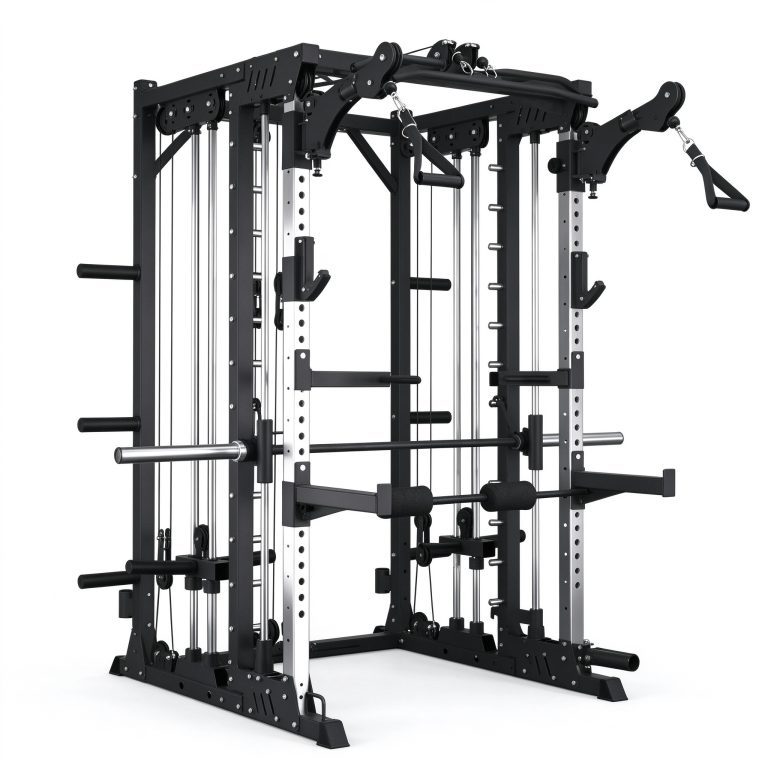
Scalability also applies to configuration. A pin-loaded station can often be paired with a plate-loaded or cable unit to create a small circuit. If you are planning a compact multi-function zone, it is worth comparing dedicated multi-station options like this 4-in-1 mini loader gym with RPL cable stations, since each solves a different space and training problem.
Matching RPL Series Configurations to Your Facility Type
For hotel gyms: compact, low-maintenance RPL setups
Hotel gyms typically operate 200–500 m² of fitness space, serve guests who train 20–45 minutes, and rely on minimal on-site staff. The winning formula is a small number of versatile stations that require almost no supervision. A practical RPL layout for a 120–180 m² hotel gym includes two pin-loaded stations (chest press and lat pulldown/row combo), one dual-cable functional trainer, and one adjustable bench with a dumbbell rack. This setup supports push, pull, legs, and core work in a footprint of roughly 25–35 m².
Durability demands are high because guests misuse equipment more often than instructed members. Choose RPL units with enclosed weight stacks, sealed bearings where possible, and wipe-clean upholstery. Budget for 1–2 preventive maintenance visits per year, and keep a spare cable and pulley kit on-site — these two components resolve most downtime incidents.
For PT studios: versatile RPL stations for one-on-one training
Personal training studios need equipment that adapts to different client goals within a single session. The RPL series supports this with adjustable cable stations, bench configurations, and plate-loaded units that let trainers program strength, stability, and rehabilitation work without moving clients between rooms.
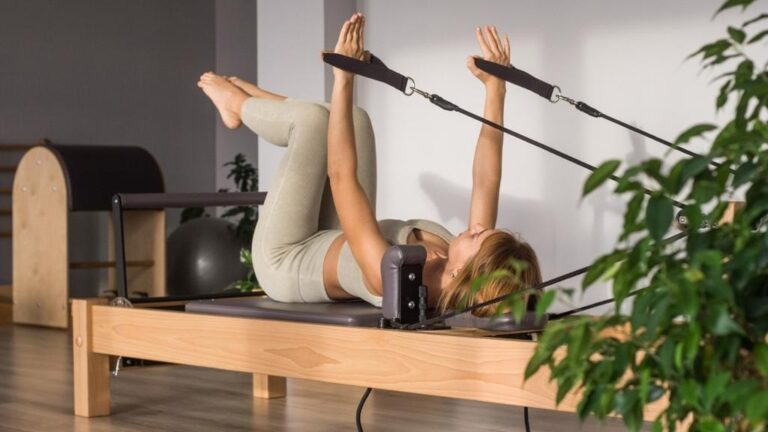
A typical 100–200 m² PT studio might allocate four to six RPL stations: a dual adjustable pulley, a functional trainer, a leg press or hack squat, a chest/shoulder press, and a lat pulldown/low row. That combination covers most programming needs for general fitness, post-rehab, and athletic clients. Pair it with a reformer if you run Pilates sessions — this article on why Reformer Pilates supports a toned physique is useful context for hybrid studios positioning themselves to female clients.
For commercial boxes: heavy-duty RPL rigs for high-traffic use
Commercial boxes — CrossFit-style, strength-focused, or 24/7 access gyms — put equipment through the toughest conditions: dropped loads, chalk dust, high humidity, and near-continuous use. Here the priority shifts from compactness to raw durability and load capacity. RPL plate-loaded stations should be specified to handle at least 200–300 kg of plates plus user weight, with reinforced pivot points and thick-gauge steel uprights.
A high-traffic box with 400–800 members typically needs 10–20 strength stations, often split between plate-loaded machines, cable stations, and power racks. RPL configurations should be grouped by movement pattern — push, pull, legs — to reduce congestion. Flooring matters here too; protective rubber tiles reduce vibration and damage to frames. Facilities upgrading a box often combine these with cement eco-friendly dumbbells to keep free-weight and machine zones coordinated.
Budgeting for RPL Series: Upfront Costs vs 5-Year TCO
Initial investment: pricing tiers and bulk order discounts
Commercial plate-loaded and pin-loaded strength stations from established manufacturers generally range from US$400–1,200 per unit depending on complexity, materials, and finish options. Cable machines and multi-station units run higher, often US$800–2,500. These are ex-works or FOB prices; freight, duties, and installation add 15–30% depending on destination.
Bulk ordering changes the math significantly. A 20-foot container typically holds 15–25 strength stations depending on packaging and configuration, and a 40-foot high-cube can hold 30–50. Committing to container quantities usually unlocks 5–15% unit price reductions and reduces per-unit freight cost by 30–50% compared to LCL shipping. Buyers planning multi-phase rollouts should negotiate pricing tiers in advance so expansion orders lock in the same rate.
Operating costs: maintenance, repairs, and downtime
Over five years, maintenance and repair costs on commercial strength equipment typically run 3–8% of initial purchase price annually in high-traffic facilities, and 1–3% in lower-traffic hotel or corporate gyms. The biggest variable is downtime cost. If a station generates US$150–400 per month in attributable member value and sits idle for two weeks, that is US$75–200 in lost value per incident — often more than the repair itself.
RPL series equipment reduces this exposure through replaceable wear parts and simple service procedures. Maintaining a small on-site spares kit (cables, pulleys, pop-pins, upholstery panels) typically costs US$150–400 and can eliminate most multi-day outages.
Resale value and depreciation of RPL series equipment
Well-maintained commercial strength equipment depreciates more slowly than cardio. Strength frames hold 40–60% of original value after five years in good condition, whereas treadmills and bikes often fall to 20–35%. Brand recognition, part availability, and frame condition drive resale. RPL series units with clean frames, intact powder coat, and documented service history typically command top-of-range resale pricing.
For facilities planning renovations every 7–10 years, this residual value is a real line item in TCO. It also creates a secondary market opportunity: smaller gyms and home users actively seek used commercial strength equipment.
Financing options and ROI for B2B buyers
Equipment financing for commercial gyms typically takes the form of leases (36–60 months), equipment loans, or manufacturer payment terms. Leases preserve working capital and may offer tax advantages depending on jurisdiction. For a US$30,000 RPL order financed over 48 months at 7–9% APR, monthly payments land around US$720–780.
ROI depends on utilization. If each RPL station supports five additional member visits per week at an average membership value of US$40/month, a ten-station setup can plausibly support US$2,000+ in incremental monthly revenue — enough to cover financing and maintenance while generating positive cash flow within the first year in a well-marketed facility.
Warranty, Delivery, and After-Sales Support for RPL Series
Warranty coverage: what’s included and what’s not
Typical commercial strength warranties from reputable manufacturers cover frames for 5–10 years, structural welds for 3–5 years, and moving parts, cables, and upholstery for 1–2 years. Wear items — grip tape, pop-pins, rubber foot pads — are usually excluded. Confirm in writing whether the warranty is pro-rated and whether it transfers if you resell the equipment.
For RPL series orders, ask for the specific warranty schedule by component. A clear schedule lets you map expected replacement timing against your maintenance budget, rather than discovering exclusions during a claim.
Delivery logistics: shipping, installation, and inspection
Shipping terms matter as much as price. FOB pricing leaves you responsible for freight, insurance, and import clearance; CIF or DDP shifts more responsibility to the supplier. For first-time importers, DDP is often worth the premium because it eliminates customs friction.
On arrival, inspect before signing the delivery receipt. Check for frame dents, powder-coat damage, missing hardware, and weight-stack integrity. Document any issues with photos within 48 hours — most suppliers require this window to honor freight claims. Installation typically takes 1–3 hours per station with two people; some suppliers offer installation support or video guidance for bulk orders.
After-sales support: training, repairs, and spare parts
Good after-sales support includes assembly documentation, maintenance schedules, and access to spare parts for at least 5–7 years post-purchase. Ask whether the supplier stocks common wear parts in your region or ships them from the factory — regional stock can cut lead times from weeks to days.
Training your in-house maintenance team on RPL stations is a high-ROI investment. Most cable and pulley replacements are straightforward with basic tools; a two-hour training session can save thousands in service call fees over the equipment’s life.
Questions to ask before placing a bulk order
- What is the exact warranty schedule by component, and is it pro-rated?
- What is the MOQ per SKU, and what price breaks apply at 10, 20, and 40+ units?
- What are the production and shipping lead times for my destination port?
- Which spare parts should I stock on-site, and at what cost?
- Can I customize frame color, logo plates, and upholstery, and what is the added lead time?
- What documentation is included (assembly manuals, maintenance schedules, compliance certificates)?
- What payment terms are available, and is escrow or LC accepted?
FAQs About RPL Series for Commercial Gyms
How does the RPL series compare to other strength lines?
The RPL series sits in the commercial mid-to-upper tier: heavier duty than home equipment, more configurable than fixed circuit lines, and more cost-efficient than premium European brands. Compared to the broader commercial strength series options available to gym owners, RPL emphasizes modular layouts and replaceable components, which suits facilities that plan to expand or reconfigure. If your priority is absolute minimal cost, entry-level lines will be cheaper; if your priority is long-term TCO, RPL usually wins.
Can I customize RPL series equipment for my gym’s branding?
Yes. Common customizations include frame powder-coat colors matched to brand palettes, embroidered or printed logo panels on upholstery, custom weight-stack labels, and branded adjustment pins. Customization MOQs vary by factory — often 5–10 units per configuration for color, higher for upholstery branding. Expect 10–20 additional production days.
What is the typical lead time for RPL series orders?
Standard configurations: 25–40 days production, plus 20–45 days ocean freight and 3–7 days customs clearance and delivery. Customized orders add 10–20 days. For urgent installs, some suppliers offer air freight on smaller quantities at 3–5x the ocean cost. Plan RPL orders 3–4 months ahead of your target opening date to avoid schedule risk.
How many RPL stations do I need for my facility size?
Rough planning benchmarks:
- Hotel gym (100–200 m²): 3–5 stations
- PT studio (150–300 m²): 5–10 stations
- Commercial box (500–1,000 m²): 12–25 stations
- Large commercial gym (1,500+ m²): 25–45 stations, often split across plate-loaded, pin-loaded, and cable zones
These figures assume 8–15 m² of usable strength floor per station including circulation space. Adjust upward for facilities with peak-hour congestion or heavy small-group programming.
Final Verdict: Which Facilities Should Choose the RPL Series?
Best fits: hotels, PT studios, and commercial boxes
The RPL series is the strongest fit for three facility types. Hotel gyms benefit from compact, low-maintenance stations that survive unsupervised use. PT studios gain versatile cable and plate-loaded units that adapt across client goals. Commercial boxes get heavy-duty frames and replaceable wear parts that tolerate high traffic and heavy loading.
Facilities that value modularity, plan multi-phase rollouts, or intend to reposition equipment during renovations should prioritize RPL. The line’s standardized components and consistent design language make it easier to scale without visual or functional disruption.
When to consider alternative strength equipment
RPL is not the right answer for every buyer. If your budget is strictly entry-level and your facility serves light traffic, a lower-cost line may be adequate. If you need highly specialized machines — competition-grade platforms, extreme-load power racks, or niche rehab equipment — dedicated lines may serve you better. And if you need immediate delivery on a single unit, local stock from a regional distributor will beat any factory order.
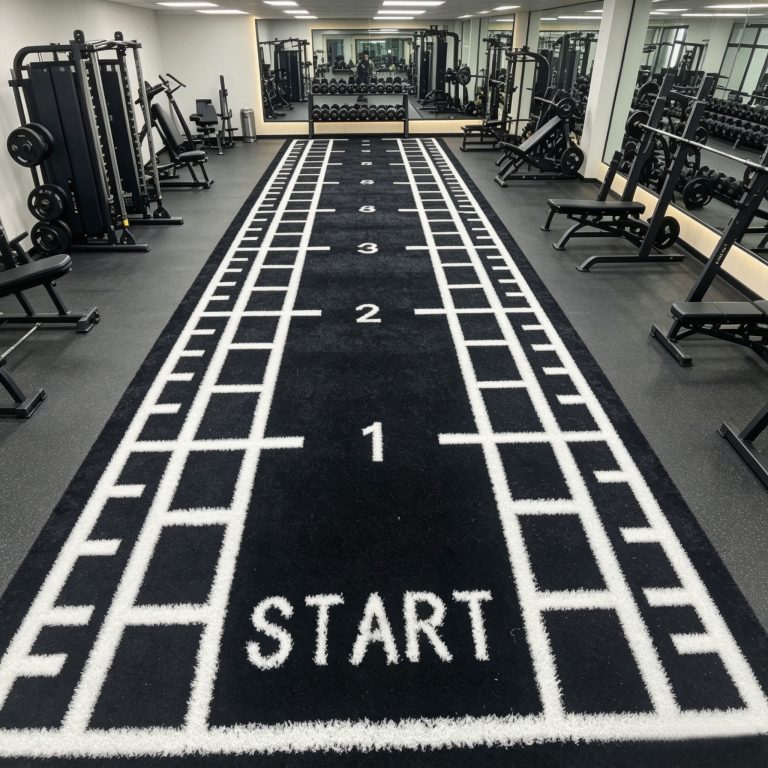
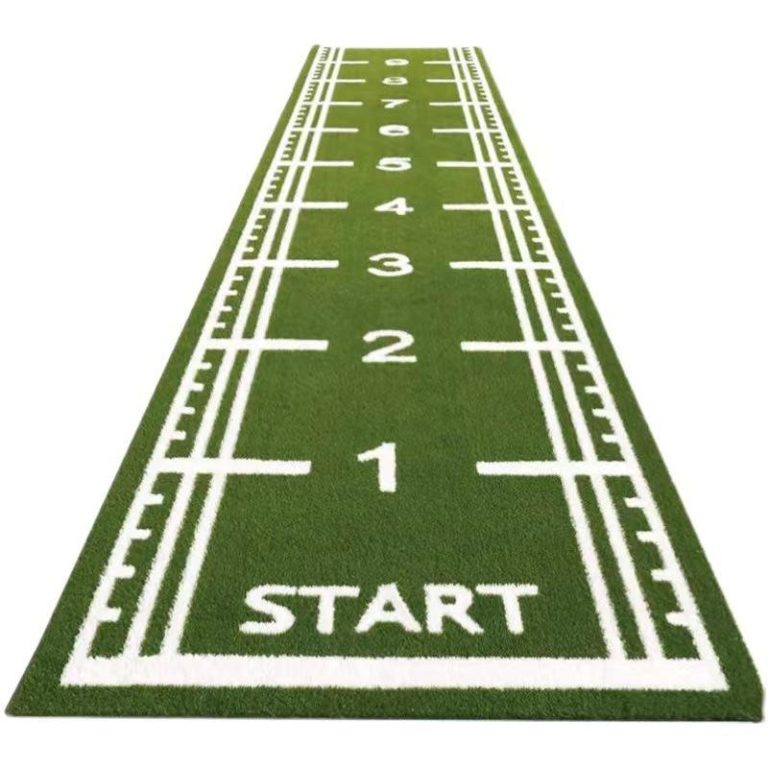
Similarly, if your training model is primarily group cardio or functional HIIT, allocating more budget to air bikes, sleds, and rigs may generate better returns than additional strength stations. Equipment strategy should follow programming strategy, not the other way around.
Next steps for ordering and setting up your RPL series
To move from evaluation to installation, follow these steps:
- Measure your strength floor, ceiling height, and circulation paths; map candidate layouts.
- Define your station mix by movement pattern (push, pull, legs, core) and facility type.
- Request quotes at 10, 20, and 40+ unit tiers, including freight to your port or door.
- Confirm warranty schedules, spare parts pricing, and customization lead times in writing.
- Plan delivery 3–4 months before opening; schedule installation and staff training.
- Set a preventive maintenance calendar and stock a basic spares kit.
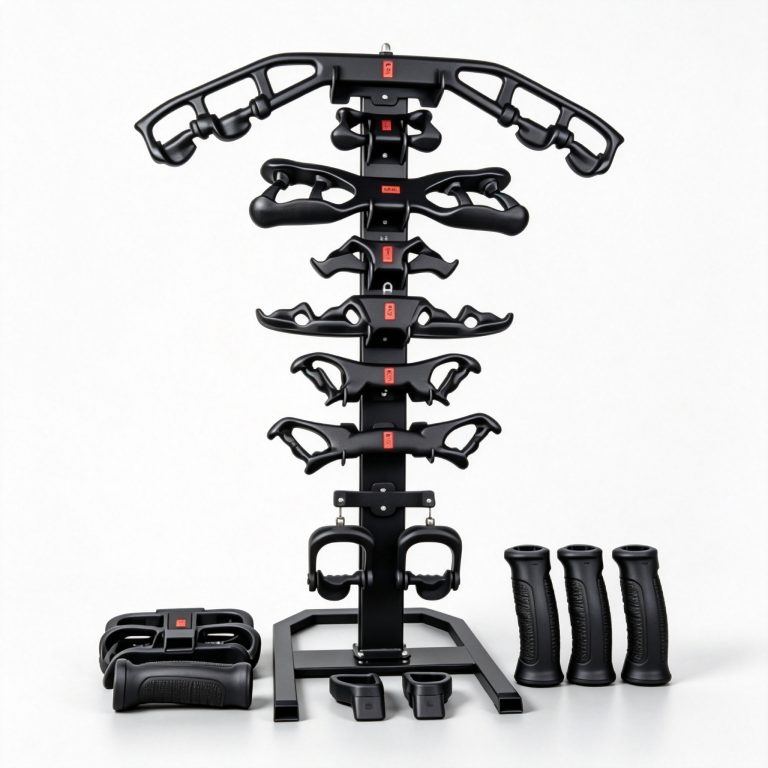
To review configurations and request a bulk quote, start with the RPL series product page and specify your facility type, floor area, and target station count. Buyers consolidating a full floor should also evaluate complementary accessories — for example, ergonomic cable attachments such as this mag grip handles set — to raise the versatility of every RPL cable station you install.