Fitness Equipment Manufacturers & Wholesale


How Member Feedback & Usage Data Drive Strength Equipment Purchases
Why Member Feedback Should Drive Your Next Commercial Strength Equipment Purchase
Who this operations guide is written for: gym owners, facility managers, and equipment buyers
This guide is for gym owners, facility managers, and equipment buyers running commercial strength spaces — from 1,200–3,000 sq ft hotel gyms and 800–2,500 sq ft personal training studios to 4,000–20,000 sq ft commercial boxes with 300–5,000 members. It assumes you are planning commercial strength equipment purchases with a real budget, typically $25,000–$300,000 per rollout, and that every station must earn its floor space through member use, retention, and manageable maintenance cost.
The core question: which commercial strength equipment purchases actually return their cost
The right question is not “Which machine looks best on the floor plan?” but “Which station will members use enough to justify its footprint, service cost, and downtime?” A $6,500 cable crossover used 100–150 times per day can return more value than a $12,000 plate-loaded single-station machine used 15–25 times per day. In a 2,000-member facility, a strength station that costs $5,000 and runs 8 years at $300/year in parts costs roughly $0.10–$0.15 per member visit — but a poorly chosen $9,000 machine with 6 service tickets per year and $900 in annual parts can cost two to three times that per use.
How feedback loops and usage data replace gut-feel buying
Replace intuition with three data streams: member feedback, usage counts, and service history. Collect short monthly surveys (3–5 questions), track check-ins by zone through access-control logs, and review maintenance tickets by station. If 28% of complaints mention waiting for squat racks while a new glute machine sits idle 70% of the day, the next purchase should be a second rack or a combo rack — not another single-station selectorized unit.
What you will be able to do after reading: build a prioritized strength equipment roadmap
You will be able to score each request against member demand, uptime, floor space, five-year cost of ownership, and retention impact, then build a 6–12 month strength equipment roadmap. The goal is a prioritized list: what to replace, what to add, what to repair, and what to stop buying.
The Real Problems Facilities Face When Strength Equipment Purchases Are Misaligned
Downtime and queueing: when popular strength stations become bottlenecks
Strength bottlenecks usually show up at peak hours, 5:00–8:00 p.m., when 8–12 members may be waiting for 2–3 popular stations. A power rack with 4–6 minute set rotations can serve only 10–15 members per hour. A hotel gym with one functional trainer and 200 daily users will see waits of 12–20 minutes. A commercial box with 250 members and two squat racks often needs a third rack or a second deadlift platform before it needs another leg extension machine.
Member complaints that signal a wrong purchase, not a wrong member
Complaints such as “the cables are frayed,” “the seat is too high,” “there are no dumbbells above 50 lb,” or “we wait 15 minutes for a rack” point to a purchasing mismatch. A 1,500 sq ft PT studio buying a $9,000 selectorized circuit when clients mostly need open turf, kettlebells, and adjustable dumbbells has bought the wrong equipment for its member profile. Complaints should be grouped by station, time of day, and member segment before they are treated as noise.
Durability failures and premature wear on high-traffic strength machines
In facilities open 16–18 hours daily, cables can fray at 18–24 months, upholstery seams can tear at 12–18 months, and chrome on dumbbells can peel after 2,000–4,000 drop cycles. A $1,200 savings on a lighter-gauge frame often turns into $400–$800 in annual parts and labor. High-traffic strength machines need commercial-grade components from day one, not after the third repair cycle.
Budget drift: buying what looks impressive instead of what members use
Budget drift happens when a facility spends $18,000 on a showcase plate-loaded leg press while members queue for $4,000 adjustable dumbbells and a second bench press. A practical rule: no single station should consume more than 10–15% of a strength budget unless usage data proves it is a top-three member demand item. Impressive equipment that sits unused still consumes floor space, insurance value, and maintenance attention.
Technical Deep Dive: Specs That Matter When Prioritizing Commercial Strength Equipment
Frame and steel grade: why Q235 and heavy-gauge tubing affect lifecycle cost
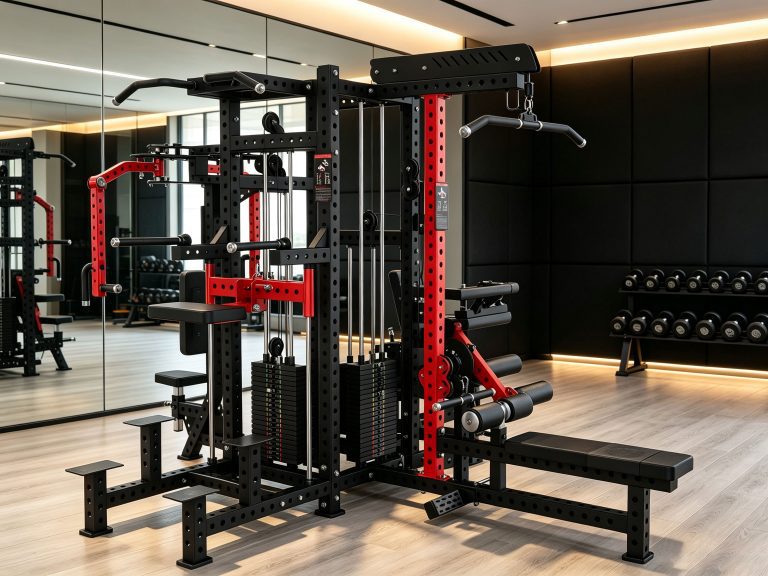
For commercial strength equipment purchases, frame steel grade and tubing thickness drive lifecycle cost more than most buyers expect. Q235 steel has a minimum yield strength of about 235 MPa, and commercial racks and cable columns should use 2.5–3.0 mm tubing — not 1.5–2.0 mm. A rack built with 2.5–3.0 mm Q235 steel can handle 300–500 kg working loads with less flex and longer weld life. A lighter frame may save $150–$300 per unit but can fail at 3–4 years in a 2,000-member gym, while a heavier commercial frame can last 8–10 years. See how Uport’s Q235 steel frame all-in-one functional trainer uses commercial-grade tubing for multi-use strength zones.
Materials and finishes: upholstery, chrome, and wear surfaces that survive daily commercial use
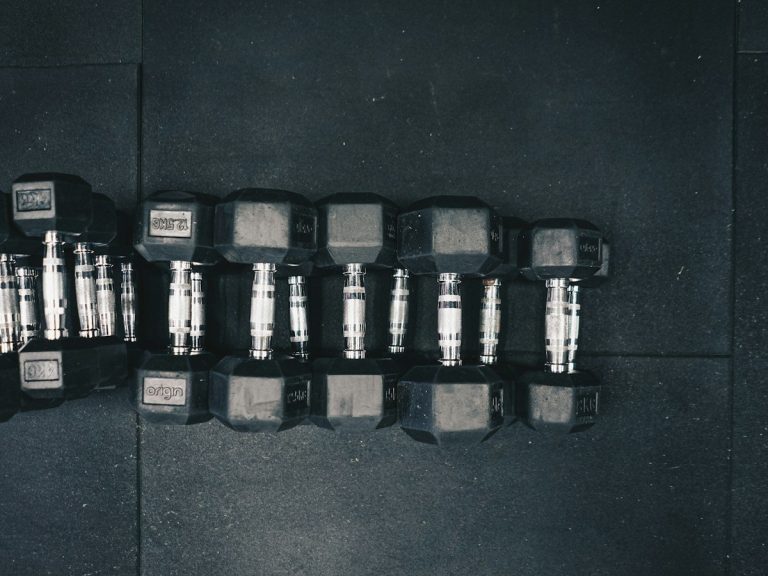
Upholstery should be double-stitched commercial vinyl, 1.5–2.0 mm thick, with a Martindale abrasion rating of 30,000+ cycles. Chrome plating on guide rods and dumbbells should be 20–30 microns; powder coat should be 60–80 microns. Cheap chrome can peel within 12–24 months in a busy gym, creating sharp edges and member complaints. For dumbbell-heavy zones, review how to choose electroplating chrome dumbbells for commercial gyms before locking in a $1–$3 per lb budget.
Mechanisms: cable systems, weight stacks, and pivots that match member usage patterns
Cable systems should use 4–6 mm 7×19 aircraft-grade cable, 90–115 mm nylon or aluminum pulleys, and sealed bearings at pivot points. Weight stacks for commercial use typically run 80–120 kg with 2.5–5 kg increments; selectorized stations should have magnetic pins and guide rods that stay aligned under 200+ daily uses. A 2:1 cable ratio gives smoother feel for functional training, while 1:1 is common on heavy lat pulldowns. A strong option for mixed-use floors is a Commercial Smith Machine Power Rack with Weight Stack, which combines rack, cable crossover, and stack-based resistance in one footprint.
Wear parts and serviceability: which components should be replaceable before you sign the PO
Before signing a purchase order, require a replaceable parts list with pricing: cables, pulleys, pop pins, weight stack pins, end caps, upholstery pads, and guide rods. Cable replacement should cost $35–$80 per cable; upholstery pads $60–$120; pulleys $15–$40. Labor should be 0.5–1.0 hour per cable change. If a supplier cannot provide part numbers and lead times, the machine is not commercial-serviceable, regardless of its warranty headline.
Installation and Space Checklist for New Strength Equipment Rollouts
Floor load and flooring: matching EPDM rubber gym flooring to strength zones
Strength zones need flooring that handles dropped dumbbells, rack feet, and loaded sleds. Use 8–12 mm EPDM rubber rolls in free-weight areas and 10–15 mm tiles under power racks and platforms. Confirm slab load capacity — typically 300–500 kg/m² for strength zones — and use Durable EPDM Rubber Home Gym Flooring Rolls rated for commercial traffic at roughly $3–$8 per sq ft. A 1,000 sq ft strength zone may need $3,000–$8,000 in flooring before equipment arrives.
Clearance and circulation: safe access around racks, cable crossovers, and functional trainers
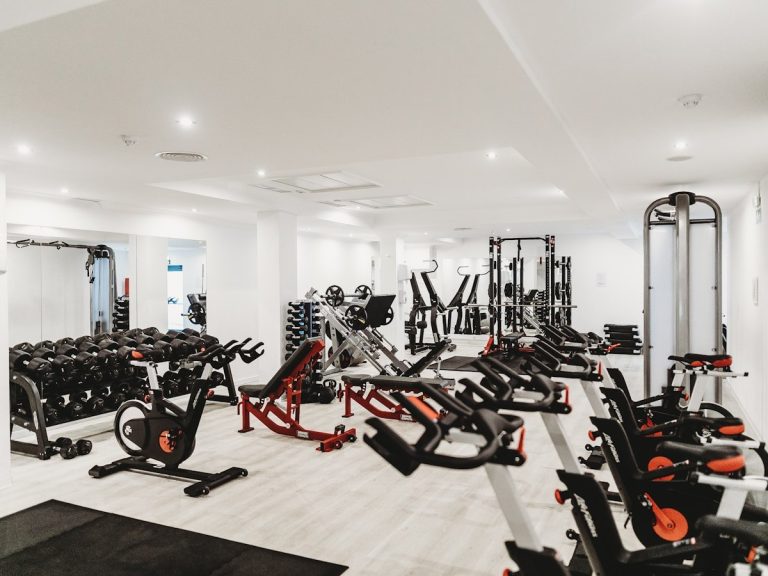
A power rack typically measures 1.2 x 1.5 m and needs 1.0 m front and back for loading and spotting, plus 0.6–0.9 m on each side. A cable crossover runs 3.5–4.2 m wide and needs a 1.2 m walkway in front. Keep 36 inches (0.9 m) minimum for ADA access and emergency egress. In an 800 sq ft hotel gym, two racks plus a functional trainer can overcrowd the room; in a 3,000 sq ft commercial box, zoning racks, turf, and cable stations separately reduces collisions and wait times.
Power and lighting: planning for cardio adjacency, mirrors, and equipment placement
Most strength machines are manual, but consoles, fans, and adjacent cardio require dedicated 20A circuits. Strength zones should be lit at 300–500 lux, with mirrors made from 4–6 mm safety glass and mounted at least 1.5 m from rack rear frames. Place mirrors so members can check form without stepping into walkways, and keep cable crossover columns out of high-traffic paths.
Delivery access: door widths, freight routes, and lead-time planning
Measure double doors (1.5 m minimum), freight elevator height (2.2 m), and pallet-jack routes before ordering. Overseas strength equipment often ships in 45–90 days; domestic stock in 2–4 weeks. Use How to Evaluate Lead Times and Inventory Reliability When Sourcing Commercial Strength Equipment Overseas to avoid a $40,000 rollout sitting in a warehouse because a 1.1 m door cannot fit a 1.3 m-wide rack.
Maintenance Schedule and Five-Year Cost of Ownership for Strength Equipment
Daily and weekly tasks: cable inspection, upholstery checks, and weight stack logs
Daily: inspect cables for fraying, check weight stack pins, and wipe upholstery. Weekly: clean vinyl with a commercial cleaner, check pop pins and adjustment tracks, and log usage by station. Budget 5–10 minutes per station per week. In a 20-station strength zone, that is 2–3 staff hours weekly — enough to catch a frayed cable before it snaps.
Monthly and quarterly tasks: torque checks, lubrication, and wear-part replacement
Monthly: torque frame bolts (M10 at 45–50 Nm, M12 at 80–90 Nm), inspect pulleys, and check cable tension. Quarterly: lubricate guide rods with silicone spray, inspect upholstery seams, and replace worn cables, pads, and end caps. Keep a signed maintenance log for each station; it becomes your evidence when a warranty claim is disputed.
Five-year cost estimate: parts, labor, downtime, and replacement cycles
For a $60,000, 20-station strength zone, plan 2–4% of capex annually for maintenance: $1,200–$2,400 per year, or $6,000–$12,000 over five years. Parts typically include $300–$800 in cables, $500–$1,500 in upholstery, and $200–$600 in pulleys and pins. Downtime can cost $200–$500 per station per day in lost member satisfaction and staff time. A machine with three service tickets per quarter and $600/year in parts is a replacement candidate at 18–24 months, not a “keep fixing it” candidate.
Using maintenance data to justify the next commercial strength equipment purchase
Maintenance data turns opinions into priorities. If station A has 6 service tickets in 12 months, station B has 1, and members complain about station C daily, the roadmap is clear: replace A, monitor B, and add capacity at C. Use the same data to negotiate warranty terms and parts kits with suppliers.
Safety, Compliance, and Red Flags in Commercial Strength Equipment Decisions
Inspection routines and documentation that protect members and the business
Run daily visual checks, monthly signed inspections, and an annual third-party inspection. Document cable condition, bolt torque, upholstery tears, and weight stack function. Keep records for at least three years. If an incident occurs, your inspection log is the difference between a defensible maintenance program and a liability problem.
Standards and certifications to request from suppliers before purchase
Ask for EN 957, ASTM F2216, CE, ISO 9001, and RoHS documentation where applicable. Request load-test reports showing 2x working load for racks and cable systems. A frame rated for 300 kg working load should be tested above 600 kg. Do not accept “commercial grade” as a certification; ask for the test report.
Staff training notes: onboarding, spotting, and member orientation
Train staff for 2 hours on each new strength station: adjustment points, safe spotting, cable inspection, and member setup. Offer a 20–30 minute member orientation for racks, Smith machines, and cable crossovers. Proper orientation reduces misuse, complaints, and warranty claims on upholstery and cables.
Common pitfalls: ignoring complaint patterns, overbuying single stations, and skipping warranty reviews
Three red flags: repeated complaints treated as “members just like to complain,” buying three single-station machines when one multi-station unit would serve more members, and accepting a warranty without reading exclusions. A 10-year frame warranty may exclude cables, upholstery, and labor — the parts that actually fail. Review the exclusions before you compare $4,500 and $6,000 machines.
FAQs About Member Feedback and Commercial Strength Equipment Purchases
How many member complaints should trigger a strength equipment purchase review?
Review a station when you receive 3–5 complaints in 30 days, or when one complaint theme appears in 20%+ of monthly survey responses. A single complaint about a frayed cable is a maintenance ticket; five complaints about waiting for a squat rack is a capacity issue.
What usage data should we track before replacing or adding strength machines?
Track check-ins by zone, peak-hour wait times, station service tickets, member survey ratings, and class or PT bookings that use the station. If a machine is used fewer than 10 times per day in a 1,500-member gym and costs $4,000+, validate demand before replacing it.
Should we buy one premium machine or several mid-range strength stations?
Buy premium where usage is highest and wear is heaviest — racks, cable crossovers, and dumbbells. Mid-range is acceptable for low-traffic specialty stations. A $7,000 commercial cable crossover used 120 times/day is a better buy than a $7,000 premium machine used 15 times/day.
How do lead times and inventory reliability affect our purchase priorities?
Long lead times should push high-demand items earlier in the roadmap. If overseas racks take 60–90 days, order them before replacing low-use specialty machines with 2–4 week domestic lead times. Keep 5–10% of the equipment budget for freight, installation, and parts.
The Bottom Line: Turning Feedback Into a Prioritized Strength Equipment Plan
A practical recommendation: score each request against usage, uptime, and five-year cost
Score every strength request from 1–5 on usage demand, maintenance burden, floor space, five-year cost, and retention impact. Weight usage and retention highest. A second power rack might score 25/25 in a 250-member box; a new glute machine might score 14/25. Use the scores to sequence purchases every 6–12 months, and review the plan quarterly against real usage data. For a broader buying framework, see this commercial strength series buying guide.
Next step: audit your top five strength stations and request spec sheets from Uport Fitness
Audit your top five strength stations this week: count daily uses, log complaints, review service tickets, and calculate five-year parts cost. Then request spec sheets, replaceable parts lists, warranty exclusions, and lead times from Uport Fitness. Match the data to the equipment — not the other way around — and your next commercial strength equipment purchases will be prioritized by member demand, uptime, and total cost of ownership.