Fitness Equipment Manufacturers & Wholesale


Wall Mounted Cable Crossover Machine: Space-Saving Strength Training for Boutique Studios, Hotel Gyms & Commercial Facilities
Space is the most expensive resource in commercial fitness. Floor-standing cable crossovers give gyms the constant-tension training members value most, but their footprint is hard to justify in boutique studios, hotel fitness rooms and compact commercial gyms. A wall mounted cable crossover machine solves this: the entire dual-pulley station moves to the wall, releasing 60% or more of the floor space a freestanding crossover needs — without giving up the exercise range of a full cable system.
Uportfitness is a commercial strength equipment manufacturer with more than a decade of R&D in pin-loaded and cable training machines. Its wall mounted functional trainer is engineered for exactly these space-constrained, high-traffic environments and is already installed in more than 1,000 boutique studios, gym chains, hotel fitness centres and high-end home gyms. This article explains how the wall mounted cable crossover works, how it compares with floor-standing crossovers, and why it is becoming a first-choice investment for space-saving gym equipment buyers.
The market direction is clear. Industry data compiled by Accio (2026) projects the wall-mounted workout rack segment to grow at a compound rate of about 8.3% from 2024 to 2030, while the global home fitness equipment market reached US$14.7 billion in 2023 with a projected CAGR of 8.6%. Google Trends data also shows rising interest in resistance-training equipment through late 2025 and into early 2026. For gym owners and procurement teams, the commercial case is simple: more training value per square metre.
What Is a Wall Mounted Cable Crossover Machine?
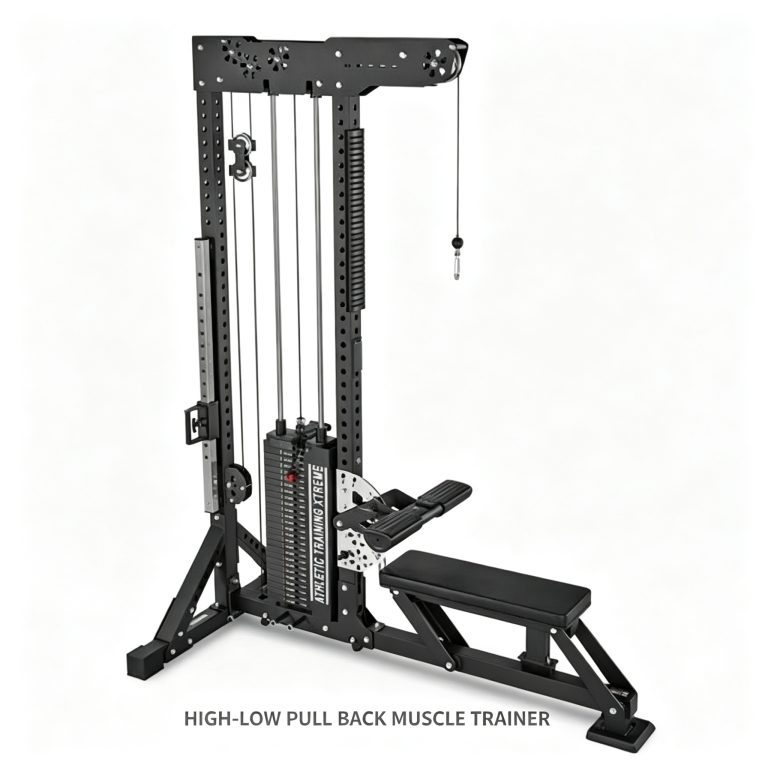
A wall mounted cable crossover machine is a dual-pulley strength station that fixes directly to a wall instead of standing on the floor. Two adjustable pulleys — high and low — provide smooth, constant linear resistance that free weights cannot replicate, making cable machines essential for muscle shaping, balanced strength development and functional or rehabilitation training. On the Uportfitness model, the left and right cables are loaded through two independent built-in weight stacks, so each side can be set to a different resistance — a feature trainers rely on for unilateral strength correction and rehab protocols.
The unit measures 1300 × 1250 × 2330 mm (51.2″ × 49.2″ × 91.7″), with a net weight of 315 kg (694 lb) including the enclosed weight-stack box. A double-row, multi-hole adjustment column positions pulleys, trolleys and hooks across the full height, covering standing, seated, bent-over and lying cable positions.
Why Choose a Wall-Mounted Functional Trainer Over a Floor-Standing Crossover?
For B2B buyers, the wall-mounted format changes three cost lines at once: floor space, installation and equipment budget. The table below compares a conventional floor-standing crossover with the Uportfitness wall mounted functional trainer.
| Consideration | Floor-Standing Crossover | Uportfitness Wall-Mounted Cable Crossover |
| Floor space | Needs a dedicated open zone in the training area | Vertical wall installation; floor footprint cut by 60% or more |
| Shipping & installation | One-piece freight and on-site assembly; large access needed | Modular parts ship flat and fit small lifts and corridors; two installers finish wall mounting and adjustment in half a day |
| Adjustment range | High/low pulleys | Double-row full-height adjustment; standing, seated, bent-over and lying positions |
| Equipment budget | Often requires separate lat pulldown, low row and crossover machines | One machine replaces three, cutting procurement cost |
Wall mounting also keeps the centre of gravity low. A widened flange base fixed with multiple expansion bolts, plus an enclosed weight-stack box, keeps the 315 kg (694 lb) frame rock-solid: high-speed pulls and heavy loaded sets produce no sway and no displacement.
Full-Body Training in One Station
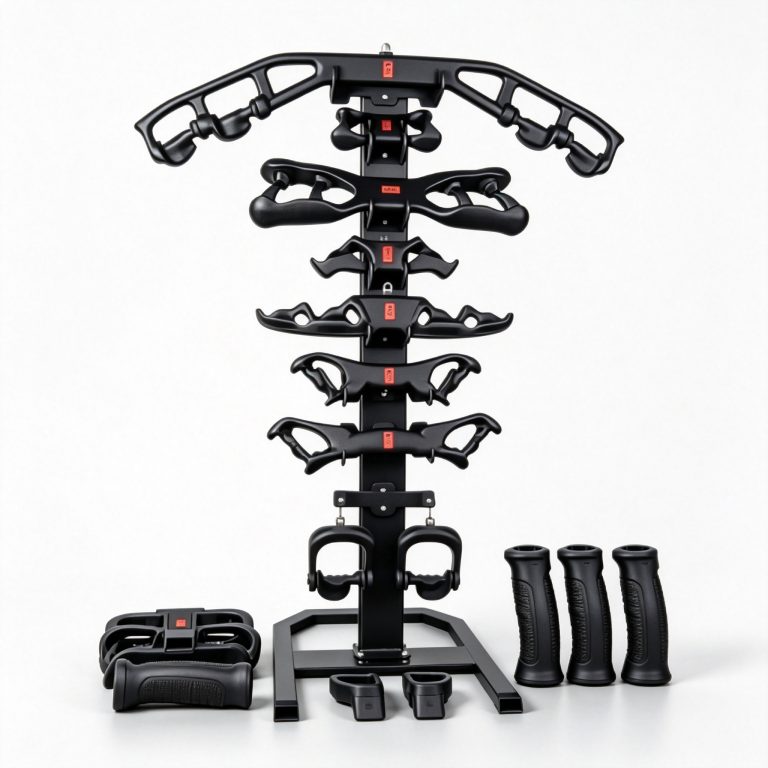
One station covers the three muscle groups most gyms prioritise — chest, shoulders and back — and extends to arms, core and legs with the included attachments: straight bar, EZ curl bar, D-handles and ankle straps.
Chest. High and low pulleys adjust independently for incline flyes, decline flyes, cable presses and standing crossover flyes, targeting the upper, inner and lower chest where barbell pressing leaves gaps.
Shoulders. Side raises, face pulls, front raises and reverse flyes work the front, side and rear deltoid. The face pull — a favourite in PT studios — is one of the best corrective movements for rounded shoulders and rotator-cuff health.
Back. Straight-arm pushdowns, seated rows, narrow-grip lat pulldowns and single-arm rows build the lats, mid-lower traps and rhomboids while correcting muscle imbalance.
Arms and legs. Cable curls, triceps pushdowns and cable kickbacks complete the picture. Because the two weight stacks are independent, small studios and hotel gyms can replace a lat pulldown, a low row and a separate crossover with one machine — cutting equipment budget while enriching the class programme.
Commercial-Grade Durability and Safety
Commercial equipment lives under constant use, so Uportfitness builds the wall mounted cable crossover to industrial standards: an 8 mm heavy-duty square steel tube frame, laser-cut openings and fully automatic robot welding with smooth, burr-free seams. Every unit passes 12 quality checkpoints from raw material to finished product, and the load-bearing frame is fatigue-tested through more than 10,000 loading cycles.
The drive system uses sealed, quiet wear-resistant pulleys with double-layer imported bearings — smooth and silent even when the whole floor trains at peak hour. High-tensile, multi-strand stainless steel cables exceed common industry strength levels, resisting abrasion and corrosion for safe, long service. An electrostatic high-temperature powder coating — matte black frame with red adjustment hardware — shrugs off sweat and disinfectant, so the machine keeps its look in high-humidity gym environments.
After-sales: every unit comes with a multi-year frame warranty and an always-in-stock spare-parts programme covering pulleys, cables and bearings; our export team coordinates replacement parts and service support with your team.
Built for Space-Constrained Facilities
Typical applications: boutique and personal-training studios; hotel and resort gyms; corporate wellness rooms; apartment-complex gyms; small commercial gyms upgrading from floor-standing machines; and high-end home gyms that want commercial-grade training.
Equipping a new studio or a chain? Uportfitness supplies wholesale gym equipment programs and works with facility projects of all sizes. Send us your gym floor plan and target training programme, and we will propose a space-efficiency equipment layout — including bulk supply, private-label branding and custom finishes on request.
Wall Mounted Cable Machine FAQ
Q: How much weight can a wall mounted cable machine handle?
A: It depends on the model and how it is anchored. This commercial model uses dual built-in weight stacks with an enclosed counterweight box; request the specification sheet for stack loads, cable ratings and anchor requirements.
Q: Are wall mounted cable machines safe?
A: Yes, when the unit is engineered and anchored correctly. Our design uses a widened wall flange, multiple expansion bolts and a low centre of gravity, and every frame passes fatigue testing and 12 QC checkpoints. Follow the installation manual or use our professional installation service.
Q: What exercises can you do on a wall mounted cable crossover?
A: Dozens across the full body: chest flyes and presses, face pulls, shoulder raises, seated rows, lat pulldowns, triceps pushdowns, cable curls and kickbacks — with high and low pulley settings for standing, seated and lying positions.
Q: How much space do you need for a wall mounted cable machine?
A: The frame is 1300 × 1250 × 2330 mm (51.2″ × 49.2″ × 91.7″). You need a load-bearing wall plus working clearance for the handles; total footprint is still far smaller than a floor-standing crossover, freeing the rest of the room for classes or other equipment.
Q: Wall mounted or freestanding — which is better for my gym?
A: If floor area is your constraint, wall mounted gives you the same training range with 60%+ less footprint, easier shipping and a lower equipment budget. Freestanding still suits large, dedicated strength zones. Most boutique operators choose wall mounted.
Looking for a gym equipment manufacturer for your next project? Request the Uportfitness wall mounted cable crossover machine specification sheet and bulk pricing today. Our export team will respond with lead times, packaging details and OEM options.