Fitness Equipment Manufacturers & Wholesale


Micro-Gym Strength Equipment: Maximizing Your Training Space
Why Space-Efficient Strength Solutions Are Essential for Urban Micro-Gyms
Space-efficient strength solutions let urban micro-gyms deliver full-body training in as little as 25–60 m² by combining vertical storage, wall-mounted cable systems and multi-station frames. Rather than shrinking the training experience, they concentrate it: fewer footprints, more exercise variety and clear circulation. Uport Fitness manufactures factory-direct commercial racks, cable crossovers and adjustable dumbbells engineered for exactly this constraint — compact enough for a 40 m² hotel gym, robust enough for a high-traffic commercial box.
Key Takeaways
- Plan 3–4 m² of clear floor per concurrent lifter and keep 90 cm circulation lanes between stations.
- A wall-mounted cable crossover replaces three to four single-station machines in roughly 2 m².
- Measure ceiling height first: most compact racks need 2.3–2.5 m of clearance for pull-ups.
- Budget 8–12% of equipment cost annually for cables, pads, upholstery and preventive maintenance.
- Verify EN ISO 20957 or ASTM F2216 compliance plus 3–5 year frame warranties before bulk orders.
The Challenge of Limited Square Footage in Urban Fitness Facilities
Urban rents routinely run USD 30–120 per square foot per year in central business districts, which pushes many operators into 60–150 m² footprints. In that space you must fit reception, changing, circulation and training. A single plate-loaded leg press with safe clearance consumes 2.5–3.5 m²; six traditional single-station machines can swallow 12–18 m² before a single member walks in.
Hotel fitness rooms are tighter still, often 25–50 m² with a 2.4–2.6 m ceiling and a service lift between floors. Personal training studios typically work with 60–120 m² and need open floor for assessment and mobility work. Each scenario demands equipment that earns its floor space every hour — not machines that sit idle because only one exercise is possible.
How This Guide Simplifies Your Equipment Selection Process
This guide converts vague “space-saving” claims into measurable criteria: footprint in square metres, exercise count per station, load capacity, warranty terms and five-year operating cost. Every recommendation is tied to a facility type and a realistic budget band, so you can shortlist two or three options per zone instead of comparing thirty catalogues.
Use it as a checklist during site surveys and supplier negotiations. If a supplier cannot confirm steel gauge, cable construction, certification or spare-part availability within 72 hours, that is already a procurement signal worth acting on.
Key Considerations for Balancing Functionality and Footprint
Three constraints usually decide the outcome. First, ceiling height: anything with a pull-up bar, lat pulldown or Smith machine guide rods needs 2.2–2.5 m of clear headroom. Second, floor loading: commercial resistance zones should be planned against a structural live load of at least 300 kg/m², and plate storage concentrates weight in small areas. Third, column and duct positions — a wall-mounted unit only works where the wall substrate can carry 150–250 kg of anchor load.
Balance comes from stacking functions. A single frame that supports squats, cable work, Smith presses and chin-ups at 4–6 m² total is almost always more useful than four dedicated machines at 12 m². That is the core logic behind any credible footprint audit.
Market Trends Driving Demand for Compact Strength Equipment
Rising Popularity of Micro-Gyms and Boutique Studios in Urban Areas
The fastest-growing segment across urban markets is the sub-250 m² facility: 24/7 access micro-gyms, single-coach PT studios, apartment-amenity gyms and boutique strength clubs running 6–10 person classes. These operators compete on coaching quality and privacy, not machine count, which favours modular and multifunctional equipment over long rows of selectorized stations.
Hotels are following the same curve. Brand standards increasingly require a functional training zone with dumbbells, a bench, a cable station and a small cardio corner inside 30–45 m². Equipment that folds, mounts to a wall or hides storage vertically wins those tenders.
Supply Chain Factors and Availability for Facility Buyers
Factory-direct sourcing has compressed the price gap between compact and full-size commercial equipment, but lead times matter more than ever. Typical production runs for custom powder coat and branding take 25–45 days, plus 20–35 days ocean freight. A 20-foot container holds roughly 26–28 CBM, which is enough for four to six fully packaged racks or a mixed order of racks, benches and dumbbell sets.
Buyers should confirm current stock on standard colours, request a packing list with per-crate dimensions and weights, and check whether the supplier ships replacement cable assemblies and pads from regional stock. Delays in spare parts cost more than a slightly higher unit price.
Space-Saving Innovations in Commercial Strength Equipment
Four innovations now define the category. Wall-mounted cable systems eliminate the heavy centre column of a traditional crossover, freeing 1.5–2 m² and improving sightlines. Weight-stack multi-gyms remove the need for plate trees, cutting storage footprint by 30–40%. Adjustable dumbbells with 1 kg increments replace up to fifteen fixed pairs and around 3 m of rack length. Folding or half racks with integrated spotter arms allow open-floor class use between sessions.
A wall-mounted cable crossover is the single highest-return installation for most urban sites: two adjustable pulley columns, 60–100 kg stacks and a footprint under 2 m² of wall line. For sites sharing walls with residences or hotel rooms, quiet strength equipment with rubber-isolated stacks and damped guide rods is worth specifying at the design stage.
What to Look for in Space-Efficient Strength Equipment
Footprint and Floor Space Utilization
Measure two footprints per machine: the static base and the working envelope, which adds 0.6 m of clearance on any side with a moving part or loaded barbell. A half rack with a 1.2 × 1.2 m base realistically needs 2.4 × 1.8 m once you include bar path and plate loading. Stack storage vertically — wall-mounted plate pegs and two-tier racks recover 1–2 m² quickly.
Also zone by traffic. Dumbbell areas should sit away from mirror walls and walkways; a well-planned dumbbell rack layout keeps the fixed-weight zone inside 6–8 m² while holding 10–12 pairs. Run a tape-line test with cones before delivery day; it catches 80% of layout mistakes.
Versatility and Multi-Functionality
Count exercises, not features. A strong compact station supports at least 12–20 distinct movements across squat, hinge, push, pull and carry patterns. All-in-one frames with a Smith bar, cable crossover, chin-up bar and optional weight stack deliver that range in 4–6 m² and remove the need for three separate purchases.
An all-in-one multifunctional Smith machine power rack is the typical anchor for a 60–120 m² studio — one footprint covering barbell, cable and bodyweight training, with 150–300 kg stack capacity depending on configuration.
Durability and Maintenance Requirements
Ask for steel gauge, weld type and coating spec. Commercial frames should use 11–12 gauge (2.5–3 mm) steel with full-perimeter welds and a two-coat powder finish; 14 gauge frames are fine at home, not in a 40-member-per-hour box. Cables should be galvanised 6×19 construction rated 900 kg or more, running on sealed pulleys with bronze bushings.
Maintenance is predictable: inspect cables and pulleys monthly, re-torque frame bolts quarterly, replace upholstery every 3–5 years and re-level racks annually. Expect 3–5% of equipment value per year in parts and labour in a high-traffic facility, and 1.5–2.5% in a hotel gym.
User Safety and Accessibility
Specify equipment tested to EN ISO 20957-1 and -2 (strength training) or ASTM F2216 for selectorized machines, and confirm the manufacturer holds current test reports. Look for weight-stack shrouds, locking pin handles, safety spotter arms rated to the full load, and adjustment ranges that fit users from roughly the 5th percentile female to the 95th percentile male.
Accessibility matters commercially: 45–50 cm seat heights, clear transfer space beside benches and contrast-marked adjustment points all improve usability. Supervision sightlines also count — if a coach at reception cannot see the far rack, that station is a risk review waiting to happen.
Compact Strength Equipment Comparison: Specs and Budgets
| Solution | Typical footprint (L×W×H) | Exercise range | Load capacity | Indicative price (USD) | Best fit |
|---|---|---|---|---|---|
| Wall-mounted cable crossover (dual 70–100 kg stacks) | 1.2 m × 0.4 m wall line, 2.3 m high | 40–60 | 100 kg per stack | $1,200–$3,500 | Hotel gyms, boutique studios |
| All-in-one Smith machine power rack with weight stack | 2.1 m × 1.6 m × 2.4 m | 50–80 | 200–300 kg barbell load; 100 kg stack | $2,500–$6,000 | PT studios, micro-gyms |
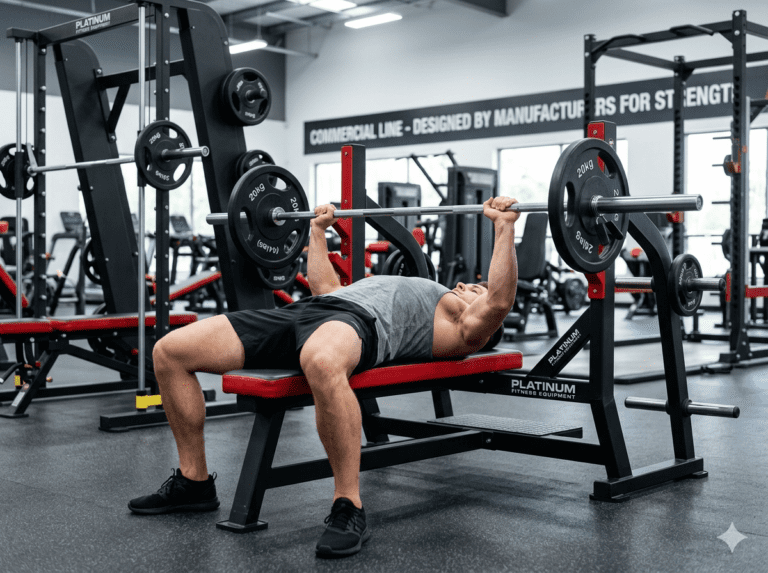
| Commercial half rack with spotter arms | 1.8 m × 1.4 m × 2.4 m | 15–25 | 300–500 kg | $600–$1,800 | Commercial boxes, strength clubs |
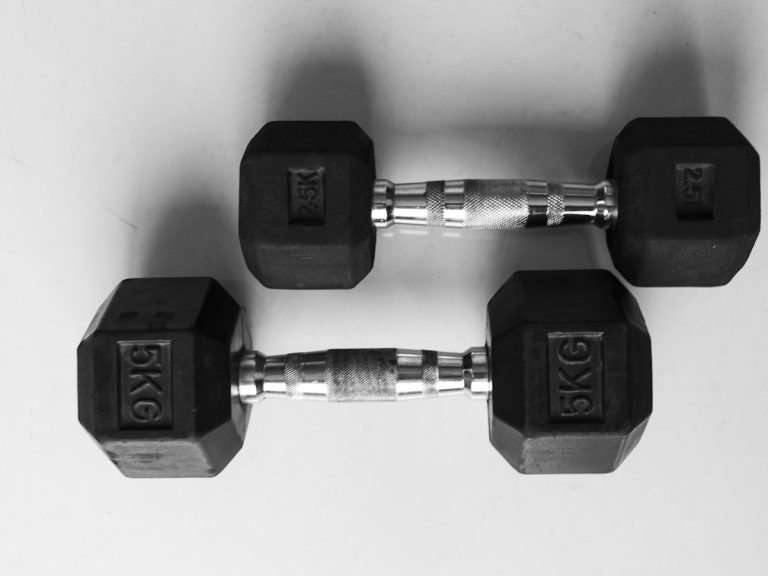
| Adjustable dumbbell pair, 2.5–40 kg, 1 kg increments | 0.8 m² per pair (2 m of rack for 8 pairs) | 30+ | 40 kg per hand | $400–$900 per pair | All micro-gym types |
| Modular functional rig, 2-bay | 4.0 m × 1.0 m × 2.5 m | 60+ | 300 kg per bay | $1,800–$4,500 | Boxes running group strength classes |
Top Strength Equipment Options for Different Micro-Gym Types
Hotel Gyms: Compact and User-Friendly Solutions
A 25–50 m² hotel fitness room typically serves 30–120 room nights per day with almost no supervision, so simplicity and silence matter as much as density. A proven package: one wall-mounted cable crossover, one adjustable bench, an adjustable dumbbell set from 2.5–25 kg, a small flat bench and 20–30 m² of rubber flooring rated 8–10 mm. Total budget: USD 8,000–25,000 depending on stack configuration and branding.
Route heavy equipment away from guest-room party walls and specify damped weight stacks where the gym shares a structure with rooms. Keep 90 cm between stations so two guests can train simultaneously without waiting, and label every adjustment point with a simple pictogram — hotel users are often first-time gym visitors.
PT Studios: Specialized Equipment for Personal Training
Personal training studios in the 60–120 m² range need assessment space plus strength density. The efficient core is a half rack or all-in-one frame, a pair of adjustable dumbbells covering 2.5–40 kg, a cable column, a flat-to-incline bench, a sled or tank for conditioning, and 3–4 m² of open turf. Budget USD 15,000–45,000 for a full build-out.
Fine weight increments are a genuine selling point in PT settings, especially for beginners and rehabilitation clients. Adjustable dumbbells with 1 kg increments let one coach progress a client from 8 kg to 9 kg without changing equipment, and they replace a 15-pair fixed rack that would have taken 3 m of wall space.
Commercial Boxes: Heavy-Duty Yet Space-Conscious Options
Boxes running 150–300 m² and 20–40 members per hour cannot trade durability for compactness. Specify 11-gauge frames, 300–500 kg-rated spotter arms and replaceable urethane or rubber contact surfaces. A workable high-density layout: four to six half racks in two rows with 1.8 m between, a two-bay rig, 2.5–50 kg hex dumbbells on two-tier racks, and 60–80 m² of platform or rubber flooring. Budget USD 40,000–120,000.
A heavy-duty commercial half rack squat stand delivers full power-rack function in roughly 60% of the floor area, and its open front allows coaching from three sides — a meaningful advantage during group sessions.
Budgeting for Space-Efficient Strength Equipment: Upfront vs. Long-Term Costs
Initial Investment Considerations
Plan capital in three tiers. Entry-level compact builds (25–50 m²) land at USD 8,000–25,000; mid-tier studios (60–120 m²) at USD 15,000–45,000; and high-density boxes (150–300 m²) at USD 40,000–120,000. Within each tier, multifunctional frames typically reduce total spend by 20–30% versus buying equivalent single-station machines, because you pay for one frame instead of four.
Do not forget the non-equipment line items: rubber flooring (USD 20–45 per m² installed), mirrors, rigging and anchors, delivery, installation labour (USD 1,500–5,000) and any structural survey. These frequently add 15–25% to the equipment invoice.
Five-Year Operating Cost Breakdown
For a 100 m² studio with a 1.2 m² cable crossover, an all-in-one rack and eight adjustable dumbbell pairs, five-year ownership costs typically break down as follows: preventive maintenance and labour USD 4,000–7,000; cable and pulley replacement USD 1,000–2,500; upholstery and pad replacement USD 1,500–3,000; flooring repair USD 1,000–2,000; and downtime lost revenue USD 2,000–6,000 if spares are not stocked locally.
Multi-function equipment usually wins on total cost because fewer machines mean fewer failure points. Conversely, cheap 14-gauge frames can triple maintenance spend within three years under commercial load — the saving is an illusion.
Hidden Costs and Savings Opportunities
Hidden costs cluster around freight and access: stair carries, liftgate fees, crating disposal and long-carry charges can add USD 500–2,000 per delivery. Modular units that pass through a standard 80 cm door avoid crane or window-rigging costs entirely. Custom powder coat and logo branding add 5–12% but rarely delay standard production.
Savings come from consolidation — one container, one supplier, one freight bill — and from buying factory-direct rather than through multi-layer distribution. Negotiate a spare-parts kit (two cables, four pulleys, pad set) into the initial order; it typically costs 1–2% of order value and prevents weeks of downtime.
Warranty, Delivery, and After-Sales Support for Bulk Orders
What to Verify in Warranty Coverage
Commercial warranties are shorter than residential ones and should be read line by line. A credible structure for commercial frames is a 5–10-year structural warranty, 3 years on weight stacks and guide rods, 2 years on pulleys and hardware, and 1 year on cables, upholstery and coatings. Confirm whether coverage is voided by outdoor use, unauthorised modification or failure to service.
Ask two questions in writing: is the warranty transferable if the facility changes ownership, and what is the guaranteed spare-part availability period? Ten years is a reasonable benchmark for commercial strength equipment.
Delivery Logistics and Installation
Bulk orders usually ship as LTL freight or in a 20-foot container, with racks crated flat to reduce volume by 20–30%. Request per-crate dimensions and gross weights 10 days before dispatch, confirm dock or liftgate availability, and map the route from kerb to final position — including door widths above 80 cm and turning radii.
Allow one to two days for installation of a five-station micro-gym with two technicians. Anchor wall-mounted units into concrete or specified blocking, not drywall, and torque all frame bolts to the manufacturer’s specification before first use. Photograph the completed build for warranty records.
After-Sales Support and Maintenance Agreements
Confirm response times and parts lead times in the supply agreement: 48-hour technical response and 5–10 working days for stocked spares is a workable standard for most urban facilities. A simple quarterly service contract covering cable inspection, bolt torque checks, pulley lubrication and upholstery assessment typically costs USD 400–1,200 per year for a micro-gym.
Train one staff member on basic adjustments and cable tensioning. Facilities that handle minor fixes in-house report far fewer member complaints and extend cable life by 30–40%.
FAQs About Space-Efficient Strength Solutions for Micro-Gyms
What are the most space-efficient strength machines for small gyms?
Wall-mounted cable crossovers, all-in-one Smith machine power racks and adjustable dumbbell pairs deliver the most exercises per square metre. A 2 m² wall station plus a 4 m² multifunctional frame and one dumbbell rack can cover 100+ movements in under 8 m² — enough for a 25–40 m² hotel gym or a compact PT studio.
How can I maximize strength training in a limited footprint?
Zone vertically and by traffic: mount cables and plate storage on walls, keep dumbbells within a 6–8 m² fixed zone, and preserve 90 cm circulation lanes. Choose equipment with 15+ exercise capability, schedule class times so open-floor work happens when racks are free, and remove any machine that duplicates a movement you already cover.
Are compact strength solutions as durable as full-size equipment?
Yes, when the steel specification matches commercial use. A compact rack built from 11–12 gauge (2.5–3 mm) steel with full-perimeter welds, galvanised 6×19 cables and a 300–500 kg load rating will outlast a larger 14-gauge machine. Compare gauge, cable rating and warranty terms rather than size or price alone.
What financing options are available for micro-gym equipment?
Most suppliers and specialist lenders offer 24–60-month equipment finance with 10–30% deposits, plus lease-to-own structures that preserve working capital. Factory-direct orders above USD 20,000 often qualify for staged payment terms — typically 30% deposit, 70% before shipment — which is worth negotiating during the quotation stage.
Final Verdict: Choosing the Right Space-Efficient Strength Equipment for Your Micro-Gym
Recommendations by Facility Type
Hotel gyms under 50 m²: one wall-mounted cable crossover, an adjustable bench and a 2.5–25 kg adjustable dumbbell set, budgeted at USD 8,000–25,000. Prioritise silence, labelling and simplicity. PT studios of 60–120 m²: an all-in-one Smith machine power rack with weight stack, 2.5–40 kg adjustable dumbbells with 1 kg increments and an open turf strip, at USD 15,000–45,000.
Commercial boxes of 150–300 m²: four to six half racks, a two-bay rig, 2.5–50 kg hex dumbbells on two-tier racks and dedicated platform space, at USD 40,000–120,000. In every case, reserve 15–25% of budget for flooring, installation and spares.
Key Takeaways for a Successful Equipment Selection
- Measure ceiling height, door widths, floor loading and wall substrates before shortlisting.
- Compare exercise count per square metre, not machine count per catalogue page.
- Demand 11–12 gauge steel, certified cables and documented EN ISO 20957 or ASTM F2216 testing.
- Buy multifunctional frames first; add single-station machines only when demand is proven.
- Negotiate spare-part kits, response times and a 5–10-year structural warranty into the contract.
The right space-efficient strength solutions turn a constrained urban floor plate into a complete training environment. Start with a measured site survey, shortlist three options per zone against the specs above, and request factory-direct quotes with freight, installation and spares included so the true cost is visible from day one.